Ground Sumac: Tangy Red Spice for Salads, Grilled Meat and Za’atar
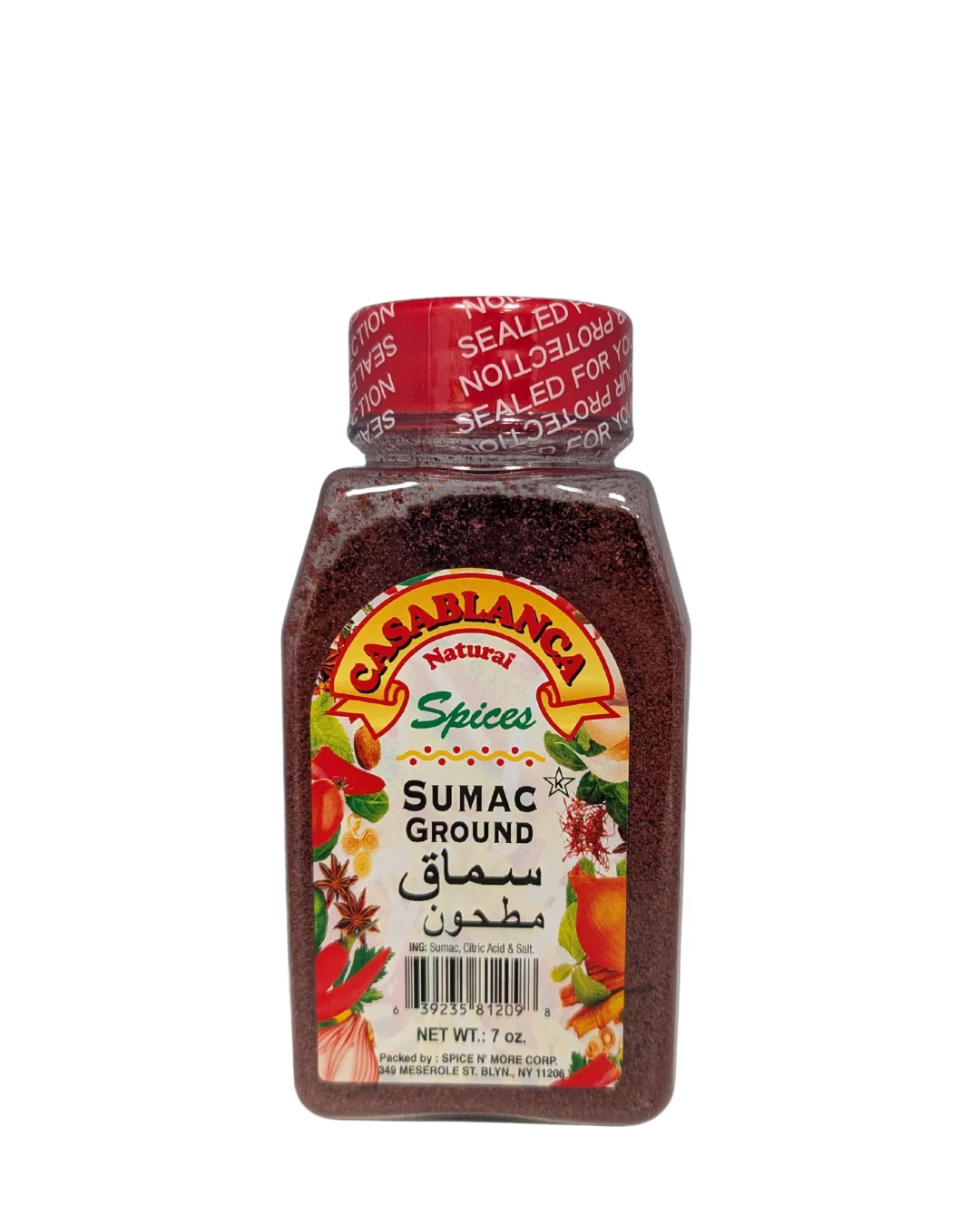
Casablanca ground sumac, labeled سماق مطحون (soumak mathoun), comes in a sealed 7 oz jar of deep red, coarse powder. Sumac has a bright, lemony tang that wakes up salads, grilled chicken, kebabs, rice, eggs and dips. It is the spice that gives fattoush and musakhan their famous sour flavor, and it is a key ingredient in za’atar blends. The label lists sumac, citric acid and salt, so it is ready to sprinkle straight from the jar.
Why Choose Casablanca Ground Sumac
Bright, lemony tang
Adds a fresh sour note to food without making it watery like lemon juice.
Beautiful color
The deep red powder makes salads, dips, rice and eggs look as good as they taste.
Large 7 oz jar
Plenty of sumac for everyday salads, grills and homemade za’atar.
Sealed for protection
The cap has a printed safety seal, and the jar shows the rich red color inside.
Sumac in Middle Eastern and Mediterranean Cooking
Sumac is made from the dried, crushed berries of the sumac shrub, which grows wild around the Mediterranean and the Middle East. Long before lemons were common, cooks used sumac to add sourness to food. Today it is a favorite in Lebanese, Syrian, Palestinian, Turkish and Iranian kitchens.
In the Levant, sumac is sprinkled over fattoush salad, sliced onions, hummus and grilled kebabs. Palestinian musakhan, roast chicken on taboon bread with onions, is covered in sumac. In Turkey it seasons onion salads served with kebabs, and in Iran a shaker of sumac sits on the table next to the salt for rice and grilled meat. Mixed with thyme, sesame and salt, it becomes za’atar, the beloved blend for bread and olive oil.
Read more about sumac and its long use as a spice. For more seasonings, browse our Moroccan Spices collection.
Taste and Aroma
Ground sumac tastes tart, tangy and fruity, a little like lemon with a hint of berries. It is not spicy or hot. The salt in this blend rounds out the sourness and makes it ready to use as a finishing seasoning.
The aroma is light, fresh and slightly fruity. Sumac is best added at the end of cooking or sprinkled over finished dishes, so its bright color and tangy flavor stay vivid.
Sumac pairs beautifully with onions, tomatoes, cucumbers, olive oil, garlic, thyme, sesame, yogurt, chicken, lamb and grilled vegetables.
Sumac also works well in North African food. Try it on grilled kefta, roasted potatoes or a simple Moroccan tomato and onion salad.
How to Use Ground Sumac
- Sprinkle 1 to 2 teaspoons over fattoush, tomato salads or cucumber salads.
- Toss thinly sliced red onions with sumac and parsley as a side for kebabs.
- Rub it on chicken, lamb or fish with olive oil and garlic before grilling.
- Dust it over hummus, labneh, fried eggs or rice for color and tang.
- Mix it with dried thyme, toasted sesame and olive oil for homemade za’atar.
Easy Recipe: Fattoush Salad with Sumac Dressing
Ingredients: 2 pita breads, 3 tbsp olive oil plus 1/4 cup for dressing, 1 romaine heart (chopped), 2 tomatoes (diced), 2 Persian cucumbers (diced), 4 radishes (sliced), 3 green onions (sliced), 1/2 cup chopped parsley, 1/4 cup chopped mint, 1 garlic clove (crushed), juice of 1 lemon, 2 tsp Casablanca ground sumac plus extra for topping, salt and pepper.
- Cut the pita into squares, toss with 3 tbsp olive oil and bake at 400°F for 8 to 10 minutes until crisp.
- Combine the lettuce, tomatoes, cucumbers, radishes, green onions, parsley and mint in a large bowl.
- Whisk 1/4 cup olive oil, lemon juice, garlic, sumac, salt and pepper.
- Pour the dressing over the salad and toss well.
- Add the toasted pita just before serving and finish with an extra sprinkle of sumac.
Ground Sumac vs. Lemon Juice
| Feature | Casablanca Ground Sumac | Lemon juice |
|---|---|---|
| Texture | Dry powder, no extra liquid | Liquid, can make food soggy |
| Color | Deep red garnish | None |
| Shelf life | Months in the pantry | Lemons spoil quickly |
| Best for | Finishing dishes, rubs, za’atar | Dressings and marinades |
More Moroccan Spices
You may also like Casablanca Tomato Paste in Glass Jar – Double Concentrated, Casablanca Anise Seeds and Casablanca Sesame Seeds. Browse all Moroccan Spices at Maghribi Market.
Product Details
| Detail | Information |
|---|---|
| Brand | Casablanca Natural Spices |
| Product | Sumac Ground (سماق مطحون) |
| Ingredients | Sumac, citric acid and salt (as printed on the label) |
| Net weight | 7 oz |
| Packed by | Spice N More Corp., Brooklyn, NY (as printed on the label) |
| Category | Moroccan Spices |
Storage Tips
- Close the jar tightly after each use to keep the color and tang.
- Store in a cool, dry and dark place.
- Use a dry spoon so the powder stays loose.
- Check the best-by date printed on the label.
Frequently Asked Questions
How do you use ground sumac?
Sprinkle it on salads, hummus, grilled meats, rice, eggs and roasted vegetables.
What is a substitute for sumac?
Lemon zest with a pinch of salt is the closest simple substitute.
What does sumac taste like?
It is tangy and lemony with a light fruity note. It is sour, not spicy.
What is in this jar?
The label lists sumac, citric acid and salt.
How do I use sumac?
Sprinkle it over salads, grilled meat, rice, hummus and eggs, or use it in rubs and za’atar.
Can I cook with it?
Yes, but it is best added near the end of cooking or as a finishing spice to keep its bright flavor.
Is sumac spicy?
No. Despite its red color, sumac has no heat.
Can I make za’atar with it?
Yes. Mix sumac with dried thyme, toasted sesame seeds and a pinch of salt.
How big is the jar?
It holds 7 oz of ground sumac.
Do you ship across the USA?
Yes. Maghribi Market ships Casablanca ground sumac across the United States.
Taste the Maghreb.
Add a jar of Casablanca ground sumac to your cart and give your salads, grills and dips a bright, tangy finish.
Reviews
There are no reviews yet.