Moroccan Sardines Why They Are the World’s Best
Discover where Moroccan sardines come from, why the Atlantic makes them so good, how they are canned, and how to pick the right tin for your kitchen.
Moroccan sardines are European pilchards (Sardina pilchardus) caught off Morocco’s cold, nutrient-rich Atlantic coast and canned in ports such as Safi and Agadir. Morocco is the biggest producer and exporter of canned sardines in the world, and the fish are prized for their firm texture, rich flavor and fair price. You will find them packed in oil, tomato sauce, spicy oil, skinless and boneless, or shaped into sardine balls.
Your Complete Sardine Origin Guide
Open a tin of sardines almost anywhere in the world and there is a good chance the fish swam off the coast of Morocco. Moroccan sardines are a quiet global giant: millions of cans leave Moroccan ports every year for Europe, Africa, the Middle East, Asia and North America.
This guide explains what makes Moroccan sardines different, from the ocean currents that feed them to the hand-packing tradition in the canneries. You will also learn how to read a label, which style suits which dish, and how to keep tins at their best. Our Moroccan sardines collection ships to all 50 states if you want to taste the difference.
- 01Moroccan sardines at a glance
- 02What are Moroccan sardines?
- 03The Atlantic advantage
- 049 reasons they stand out
- 05A century of fishing and canning
- 06The great sardine ports
- 07From boat to tin
- 08Styles of canned sardines
- 09How to read the label
- 10How Moroccans eat sardines
- 11Storage, safety and nutrition
- 12What to buy
- 13FAQs
Moroccan Sardines at a Glance
What Are Moroccan Sardines?
Moroccan sardines are the same species fished in Portugal, Spain and France: Sardina pilchardus, known in English as the European pilchard. It is a small, silvery, oily fish with a blue-green back, usually canned when it is roughly 5 to 8 inches long.
In Morocco the fish is simply called sardine (often written sardin in Darija). It is the most landed fish in the country by far. According to an FAO country profile, sardines made up almost 60 percent of Morocco’s total fish captures in 1999, and other FAO reports put the share of coastal landings even higher.
What changes from country to country is not the species but the water, the season, the handling and the recipe in the can. That is where Moroccan sardines earn their reputation. The fish feed in some of the most productive water on the planet, and the canneries have been perfecting their methods for more than a century.
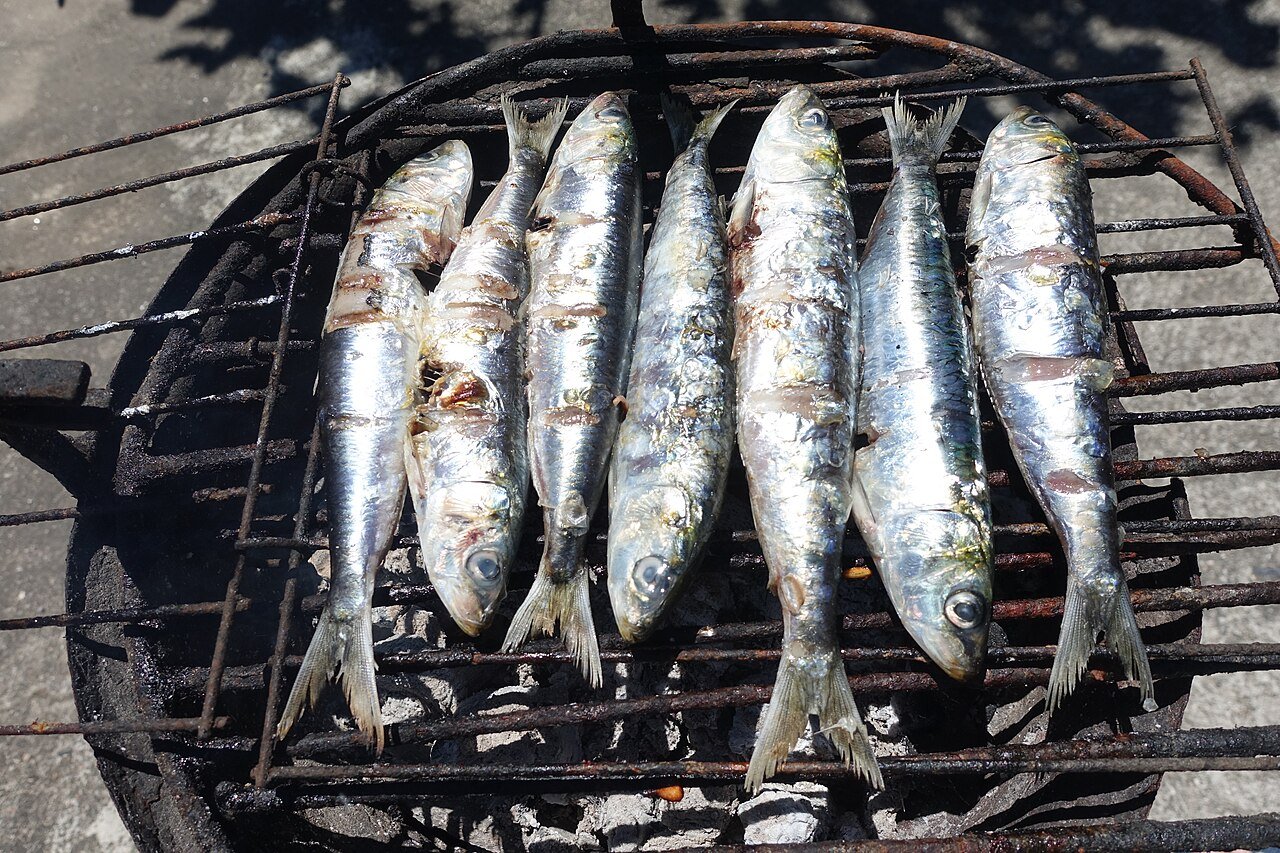
The Atlantic Advantage: Why Moroccan Sardines Taste So Good
Off Morocco’s Atlantic shore, steady trade winds push surface water away from the coast. Cold, deep water rises to replace it, carrying nutrients that feed huge blooms of plankton. Scientists call this upwelling, and it is the reason the region is one of the richest fishing zones on earth.
This coast is part of the Canary Current upwelling system, one of the four great eastern boundary upwelling systems of the world, alongside those off California, Peru and southwest Africa. An FAO fishery review describes Morocco’s Atlantic zone as among the most productive anywhere because the trade winds blow nearly all year.
What upwelling means on your plate
Sardines eat plankton. Plenty of food in cool water helps them build fat, and fat carries flavor. That is why well-chosen Moroccan sardines taste rich and meaty rather than thin or watery, and why the flesh stays firm in the can.
The same water also supports anchovy, mackerel and horse mackerel, which is why Moroccan ports land so many small pelagic fish.

9 Reasons Moroccan Sardines Stand Out
“Best in the world” is a big claim. Here is what actually sets Moroccan sardines apart, from the sea to the shelf.
Cold, rich Atlantic water
Upwelling keeps the coast cool and full of plankton, so the fish are well fed and flavorful.
True European pilchards
You get Sardina pilchardus, the classic canning sardine, not a mix of other small fish.
World-leading volume
Morocco produces more canned sardines than any other country, which keeps prices fair.
Short trip from boat to factory
Canneries sit right beside the fishing ports, so fish can be processed soon after landing.
Hand-packed tins
Many factories still clean and arrange fish by hand, a skilled job done largely by women.
Huge range of styles
Oil, tomato, chili, lemon, skinless boneless and sardine balls: there is a tin for every dish.
North African seasoning
Spicy oils, tagine sauces and tomato blends bring Moroccan flavors straight from the can.
Built for export
Most of the output is sold abroad, so plants are set up to meet strict importing-country food rules.
Protein for pennies
A single tin makes a quick, filling meal that costs far less than fresh fish at the counter.
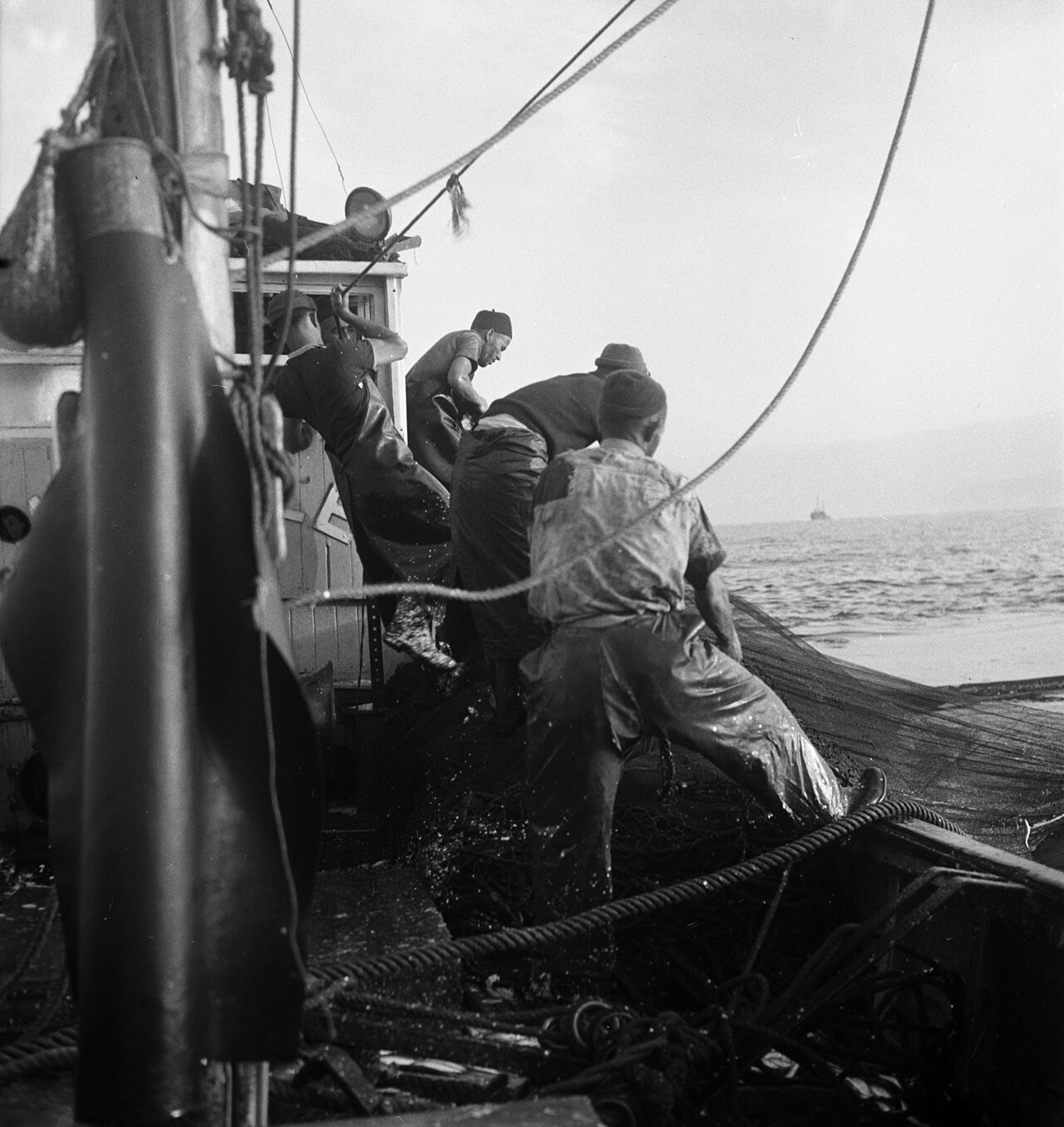
A Century of Fishing and Canning
Sardine fishing was already important in Morocco by 1914. At that time, small artisanal boats supplied canning factories that Spanish and French companies had set up along the coast. Safi grew into the heart of the trade and is still called the sardine capital.
The modern sea fishery expanded strongly from the early 1960s, as purse seiners grew in number and new ports opened further south. Canning became the most important branch of the Moroccan fish industry.
The modern industry
Today, dozens of processing plants work along the Atlantic coast. A 2025 industry report covered by Hespress described the sector as one of the largest employers in several coastal towns, with hundreds of thousands of direct and indirect jobs and a large share of women in the canneries.
Moroccan sardines now travel to Europe, the Middle East, Africa, Asia and the Americas, and Morocco is regularly described as supplying around half of the world’s canned sardines.
Moroccan sardines by the numbers
| Fact | Figure | Source |
|---|---|---|
| Share of world European pilchard catch (1999) | About 46 percent | FAO country profile |
| Sardines as share of Morocco’s total fish captures (1999) | Almost 60 percent | FAO country profile |
| Share of canned output exported (late 1990s) | About 80 percent | FAO country profile |
| Sardine landings, 2022 vs 2024 | About 965,000 t vs 525,000 t | Moroccan fisheries ministry, via Ecofin |
| Frozen sardine exports | Suspended from February 1, 2026 to protect local supply | Moroccan fisheries ministry, via Ecofin |
That recent drop in landings is a reminder that sardine stocks rise and fall with ocean conditions and fishing pressure. Morocco manages the fishery with quotas, seasonal rest periods and zones, and the frozen-fish export pause did not target canned sardines.
The Great Ports Behind Moroccan Sardines
The Moroccan coast is divided into fishing zones running from the Mediterranean down to the far south. These are the names you will often see on cans and in the news.
Safi
The historic sardine capital and still the main fishing port for the country’s sardine industry. Several well-known brands carry the city’s name.
Agadir
A huge fishing port with canneries, fish meal plants and freezing units. Much of the modern canning capacity sits in and around the city.
Laayoune, Tan-Tan and Dakhla
Southern ports land a growing share of the catch, closer to the most productive fishing grounds.
Essaouira, the picture-postcard port
Between Safi and Agadir lies Essaouira, famous for its rows of blue wooden boats. Its fishing port is smaller, but it is where many visitors first taste grilled Moroccan sardines, cooked over charcoal a few steps from where the boats come in.
From Boat to Tin: How Moroccan Sardines Are Canned
Every factory has its own recipe, but the basic path from the sea to your pantry is similar across the industry. Here is how it usually works.
- Catch. Purse seine boats circle a shoal with a large net, then close the bottom like a drawstring purse. Most trips are short, often overnight.
- Chill and land. The fish are kept cold in ice or chilled seawater and landed at the port, where they are graded by size and freshness.
- Clean. Workers or machines remove heads and guts. For skinless and boneless packs, the fish are also skinned and filleted.
- Brine. A short soak in salt water seasons and firms the flesh.
- Pack. The fish are laid in the tins, often by hand, so they sit neatly side by side.
- Pre-cook. Many plants steam the packed fish briefly and drain off the liquid so the final sauce is not diluted.
- Fill and seal. Oil, tomato sauce or a spiced sauce is added, then a machine seams the lid on airtight.
- Sterilize. Sealed cans are heated under pressure in a retort. This cooks the fish fully, softens the small bones and makes the tin shelf stable.
- Cool, code and pack. The cans are cooled, printed with a batch code and best-before date, then boxed for export.
Styles of Canned Moroccan Sardines
Walk down the canned fish aisle of a North African grocer and you will see dozens of colorful boxes. They fall into a few main families, and each one suits a different kind of meal.
Oil packs are the most versatile. Tomato packs are softer and ready to eat with bread. Spicy packs bring the heat, and sardine balls are a full meal in a can.
If you are new to Moroccan sardines, start with one classic tin in tomato sauce and one in oil, and taste them side by side.

In tomato sauce
Soft, mild and comforting. Great on toast or warmed with onions. A Safi tin in tomato sauce is the classic.
In vegetable or sunflower oil
Firm fish for pasta, salads and sandwiches. Drain or use the oil in dressings.
Spicy with chili
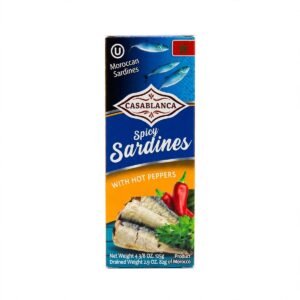
Chili-infused oil gives a real kick. Hot Safi sardines are a favorite.
Skinless and boneless
Fillets for people who dislike skin and bones. See Casablanca skinless boneless.
With vegetables
Sardines in a tagine-style sauce with vegetables, like Mario sardine tajine.
How to Choose Moroccan Sardines: Reading the Label
A few seconds with the box tells you a lot. Most tins of Moroccan sardines are labeled in French and Arabic, often with English too, so it helps to know the key words.
| On the label | What it means | Why it matters |
|---|---|---|
| Produit du Maroc / Product of Morocco | Packed in Morocco | Confirms you are buying genuine Moroccan sardines |
| Sardina pilchardus | The species | Tells you it is a true sardine, not a sprat or herring |
| A l’huile vegetale / huile de tournesol | In vegetable or sunflower oil | Neutral flavor, good for cooking |
| A l’huile d’olive | In olive oil | Richer taste for eating straight from the tin |
| A la sauce tomate | In tomato sauce | Softer fish, ready to serve with bread |
| Piquante / aux piments | Spicy, with chili | Expect real heat |
| Sans peau et sans aretes | Skinless and boneless | Milder taste, fewer bones, less calcium |
| A consommer de preference avant | Best before | Quality date, not a safety cutoff |
Quick checks before you buy
- Skip any can that is bulging, leaking, badly dented on the seam or deeply rusted.
- Look at the net weight. The standard Moroccan tin is about 125 g (4.4 oz).
- Check the drained weight if listed; it tells you how much fish you get.
- Buy two or three styles at first and keep the one your family likes best on hand.
How Moroccans Eat Their Sardines
In Morocco, sardines are everyday food, not a luxury. Fresh fish are grilled at port stalls, stuffed with herbs, rolled into meatballs or fried, and tins are a pantry staple for quick lunches.
Grilled at the port
At harbor grills in Essaouira, Safi and other towns, cooks salt whole fresh sardines and grill them over charcoal for a few minutes per side. They are eaten with bread, tomato salad and a squeeze of lemon.
Sardine kefta
Mashed sardines mixed with herbs, garlic and spices are shaped into balls and simmered in a tomato sauce. Canned sardine balls give you a shortcut to the same dish.
Quick pantry meals
A tin of sardines with bread, olives and a little harissa is a classic quick meal. For more on the paste, see our harissa guide.

Recipe: chermoula sardines (fresh or canned)
Ingredients
- 1 lb fresh sardines, cleaned and butterflied, or 2 tins (125 g each) Moroccan sardines in oil, drained
- 1 small bunch cilantro and 1 small bunch parsley, finely chopped
- 3 garlic cloves, crushed
- 1 teaspoon ground cumin
- 1 teaspoon sweet paprika, or 2 teaspoons fish chermoula spice
- Juice of 1 lemon
- 3 tablespoons extra virgin olive oil
- Salt and a pinch of chili flakes
Method
- Make the chermoula. Mix the herbs, garlic, spices, lemon juice, oil and salt into a loose paste.
- Coat the fish. Spread the chermoula over the fresh sardines, or gently over the canned fish in a baking dish.
- Rest. Leave fresh fish in the fridge for 20 to 30 minutes. Canned fish can go straight to the oven.
- Cook. Grill fresh sardines 2 to 3 minutes per side, or bake at 400°F for 10 to 12 minutes. Bake canned sardines at 400°F for 8 to 10 minutes, just until hot.
- Serve. Add lemon wedges, bread and black olives.
Storage, Safety and Nutrition
How to store canned sardines
Keep unopened tins in a cool, dry cupboard away from the stove. They are shelf stable for years, and many fans say the flavor softens and deepens with time. Always go by the best-before date printed on the can.
Once opened, move leftovers to a glass or plastic container, cover, refrigerate and eat within one to two days.
A quick nutrition note
General information only, not medical advice. Sardines are a low-mercury fish. The US FDA advice about eating fish places sardines in its “Best Choices” group, which can be eaten two to three times a week as part of a varied diet. Sardines are also known for protein, omega-3 fats, vitamin D and, when the bones are eaten, calcium.
Canned fish can be high in sodium, so check the label if you watch your salt intake. People with gout or on a low-purine diet, and anyone with a fish allergy, should ask a health care provider before adding sardines to their routine.
Best Moroccan Sardines to Buy in the USA
Six favorite tins from our pantry, each made in Morocco and shipped across the US. Browse the full sardine range for more styles.
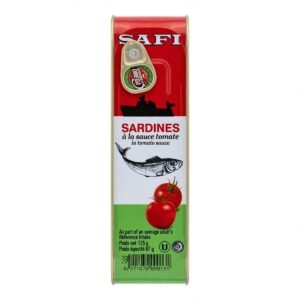 Best classicSafi Sardines in Tomato Sauce
The everyday tin for toast, rice and quick lunches.
Shop now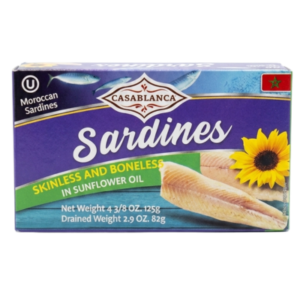 Best for beginnersCasablanca Skinless and Boneless
Clean fillets with no skin or bones to pick out.
Shop now

 Something differentTagine Sardine Balls, Sevillane
Sardine balls in a tangy Sevillane-style sauce.
Shop nowAlso worth a try: Tagine sardine balls in tagine sauce. See our shipping policy for delivery times.
Moroccan Sardines FAQs
Why are Moroccan sardines considered the best?
They come from the cold, plankton-rich upwelling waters of Morocco’s Atlantic coast, which produce well-fed, flavorful fish. Morocco also has more than a century of canning experience, a huge range of styles and fair prices thanks to its scale.
What species are Moroccan sardines?
They are European pilchards, Sardina pilchardus, the same species canned in Portugal, Spain and France. Many Moroccan labels print the species name, which helps you tell true sardines from sprats or herring.
Is Morocco the largest producer of canned sardines?
Yes. Morocco is widely reported as the largest producer and exporter of canned sardines, supplying roughly half of the world’s canned sardine market, with factories concentrated in Safi, Agadir, Laayoune and other Atlantic ports.
Are Moroccan sardines safe to eat?
Sardines are a low-mercury fish, and the FDA lists them among its Best Choices for fish. Buy tins that are not bulging, leaking or badly dented, follow the best-before date and refrigerate leftovers once opened.
Do you eat the bones in canned sardines?
Yes, most people do. The pressure cooking used in canning softens the small bones until they are tender and easy to eat. If you prefer no bones, choose skinless and boneless sardines.
What is the difference between Moroccan and Portuguese sardines?
Both use the same species. Portuguese tins are often sold as premium, smaller-batch products at higher prices, while Morocco produces far larger volumes and offers great value, with North African styles like spicy oil, tagine sauce and sardine balls.
How long do canned sardines last?
Unopened tins usually keep for several years in a cool, dry cupboard. Use the best-before date as your guide. After opening, move leftovers to a covered container in the fridge and eat them within one to two days.
Further reading: FAO fishery country profile: Morocco · FAO review of the Moroccan small pelagic fishery · FDA: Advice about eating fish
Taste the Atlantic at Home
Authentic Moroccan sardines in oil, tomato, spicy sauces and sardine balls, delivered anywhere in the USA.
Shop Moroccan Sardines Shop All Products