How to Make Moroccan Mint Tea The Authentic Atay Guide
Learn the classic seven-step method for Moroccan mint tea, the right tea, mint and sugar, the famous high pour, regional twists and the gear that makes it easy at home.
Moroccan mint tea is Chinese green tea brewed with a big bunch of fresh spearmint and plenty of sugar, then poured from a height into small glasses. Rinse about one tablespoon of gunpowder tea with boiling water, add mint and sugar, fill the pot and heat it gently for a few minutes. Mix by pouring a glass out and back a few times, taste, then pour high so each glass gets a light foam.
Your Complete Atay Guide
Few drinks say “welcome” as clearly as Moroccan mint tea. In Morocco it is called atay, and it is poured for guests, after meals, at weddings and on ordinary afternoons. It is sweet, fresh and a little grassy, and the ritual of making it matters almost as much as the taste.
The good news is that Moroccan mint tea needs only four ingredients and about 15 minutes. Below you will find the method North African families use, how to choose the right green tea from our tea time collection, which mint to buy in a US supermarket, and how to fix bitter or flat tea.
Moroccan Mint Tea at a Glance
What Is Moroccan Mint Tea and Where Does It Come From?
Moroccan mint tea is part of a wider family often called Maghrebi mint tea, which is drunk across Morocco, Algeria, Tunisia, Libya and Mauritania. The base is always Chinese green tea. Fresh spearmint gives the aroma, and sugar balances the slight bitterness of the leaves.
Tea is not native to North Africa. Historians trace its spread to British merchants in the 18th and 19th centuries, with much of it arriving through the Atlantic port of Essaouira. A court officer of Sultan Slimane, who ruled from 1792 to 1822, is remembered as an early “master of tea” at the palace.
Imports grew quickly after an Anglo-Moroccan trade treaty in 1856. A popular story says British traders sent tea to Morocco when the Crimean War closed Baltic markets. For a long time tea was an urban luxury, but by the early 20th century it had become an everyday drink across the country.
Today Moroccan mint tea is so tied to hospitality that offering a glass is the first thing many families do when a guest walks in. You can read more about its history in the Maghrebi mint tea entry on Wikipedia.
The Four Ingredients
Great Moroccan mint tea is simple, so the quality of each ingredient shows. Here is what to look for.
1. Chinese green tea
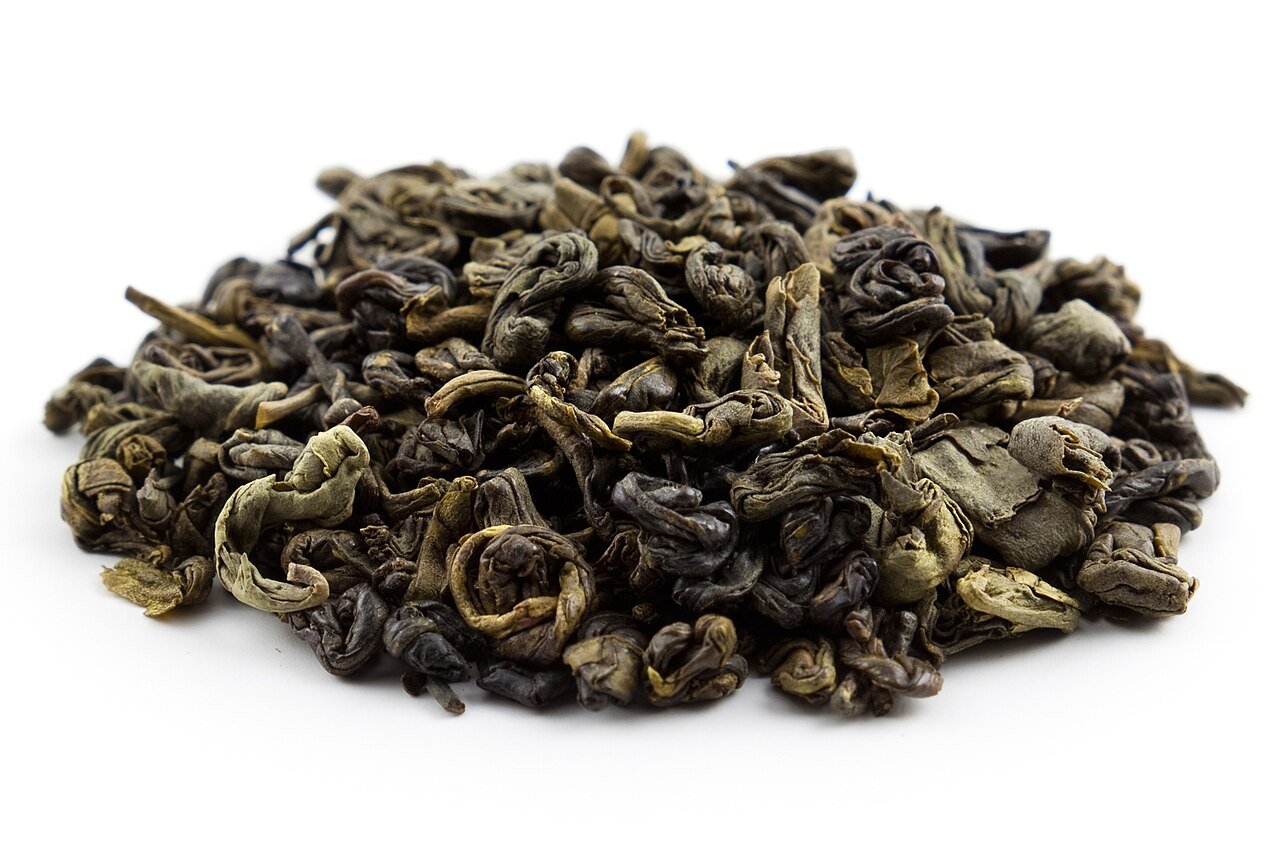
Most Moroccan households use gunpowder tea, whose leaves are rolled into small pellets that unfurl in hot water. Many brands also sell chunmee, a curled-leaf style often labeled with the code 41022. Both are strong enough to stand up to mint and sugar.
2. Fresh spearmint
The traditional herb for Moroccan mint tea is spearmint (Mentha spicata), called nana in Morocco. In US stores, the bunches simply labeled “mint” are usually spearmint. Peppermint works in a pinch, but it is sharper and more menthol-heavy.
3. Sugar
Moroccans traditionally break sugar from large cones, but cubes and ingots are now common. Moroccan sugar cubes dissolve evenly and make it easy to measure.
4. Boiling water
Unlike many East Asian green tea methods, atay uses water at a full boil. Filtered water gives a cleaner taste if your tap water is hard.

Which green tea is best for Moroccan mint tea?
| Tea style | What it looks like | Flavor in atay | Try |
|---|---|---|---|
| Gunpowder (grains) | Tight, dark green pellets | Bold, slightly smoky, very traditional | Sultan Al Ambar |
| Chunmee (41022) | Long, curled leaves | Bright and robust, a favorite of many brands | Al Mohajer 41022 |
| Chunmee, 200 g packs | Curled leaves, smaller bag | Good for trying a new brand | Dahmiss 41022 |
| Scented green tea | Green tea with jasmine flowers | Floral and softer; a fun change | Sultan Jasmine N°25 |
How to Make Moroccan Mint Tea Step by Step
This Moroccan mint tea recipe fills a standard 24 to 32 oz Moroccan teapot and serves 6 to 8 small glasses. Adjust the sugar to your taste.
Ingredients
- 1 heaping tablespoon gunpowder or chunmee green tea
- 1 large bunch fresh spearmint (about 1 oz), rinsed
- 4 to 6 sugar cubes, or 3 to 5 tablespoons granulated sugar
- About 4 cups water, brought to a rolling boil
- Optional: a few sprigs of verbena or a pinch of wormwood (see variations)
You will need
- A stovetop-safe metal teapot
- 6 to 8 small tea glasses
- A kettle and a tray
Method
- Boil the water. Bring about 4 cups of water to a full boil in a kettle.
- Wake up the tea. Put the tea in the empty pot, add about half a cup of boiling water and swirl for 20 seconds. Pour this first liquid into a glass and set it aside. Many families call it the “spirit” of the tea.
- Rinse the leaves. Add another half cup of boiling water, swirl for a few seconds and discard it. This washes away dust and some of the bitterness.
- Build the pot. Return the reserved glass to the pot. Add the sugar, then push the mint in on top. Fill the pot with boiling water, leaving a little room at the top.
- Heat gently. Set the pot on low heat for 3 to 5 minutes, just until it starts to bubble. Do not let it boil hard, or the mint will taste stewed.
- Mix by pouring. Pour a glass and tip it back into the pot. Repeat 3 or 4 times to dissolve the sugar without bruising the mint.
- Taste and pour high. Taste a small amount and add sugar if needed. Then pour into glasses from 8 to 12 inches above, filling each about two-thirds full.
The High Pour and the Foam
Pouring Moroccan mint tea from a height is not only for show. The long stream cools the tea a little, mixes the sugar and adds air, which brings out the aroma of the mint.
It also creates a light layer of bubbles on top of each glass. In many Moroccan homes, a good foam is seen as a sign of a well-made pot and a respectful host.
How to practice the pour
Start with the spout just above the glass. As the stream begins, lift the pot slowly to about 8 to 12 inches, then lower it again before you stop. Practice over the sink with water until it feels natural.
Use a tray under the glasses to catch drips. Hold the teapot handle with a folded cloth, because metal pots get very hot.

8 Tips for Better Moroccan Mint Tea
Most problems with homemade Moroccan mint tea come from too much heat, too little rinsing or tired mint. These tips fix them.
Never skip the rinse
The quick wash removes dust and some bitter tannins, which gives a cleaner, rounder glass.
Use lots of fresh mint
A real bunch, stems included, is normal. Limp or yellow mint gives a flat, grassy taste.
Simmer, do not boil hard
A few minutes on low heat is enough. A rolling boil makes the mint taste cooked.
Sweeten in the pot
Sugar added in the pot blends better than sugar stirred into each glass, and the pour mixes it for you.
Keep the tea to one spoon
More leaves do not make better tea; they make bitter tea. Start with one heaping tablespoon per pot.
Refresh for round two
For a second pot, keep the leaves, add a little fresh mint, sugar and boiling water, and heat again briefly.
Warm the glasses
Rinse glasses with hot water first. Thin glass can crack if it is very cold and the tea is very hot.
Store tea airtight
Keep green tea in a sealed tin away from light, heat and strong smells like spices or coffee.
Serving Etiquette and the Three Glasses
Traditionally, the head of the household or an honored family member prepares Moroccan mint tea, often in front of the guests. The whole process can take a long time, and that is part of the point: tea is a reason to sit and talk.
Tea is usually served in at least three rounds. A well-known saying compares the three glasses to life, love and death, because each round tastes different as the leaves steep longer.
Accepting at least one glass is polite. Tea appears at breakfast, after lunch, at weddings, at births and even at funerals. A USC Digital Folklore Archives entry describes how the ritual is passed down from grandparents to grandchildren.
Simple etiquette for hosts
- Serve the eldest or most honored guest first.
- Fill glasses only about two-thirds so they are easy to hold.
- Offer something small to eat, such as cookies or nuts.
- Keep the pot warm and offer a refill when a glass is empty.

Teapot, Glasses and Tray
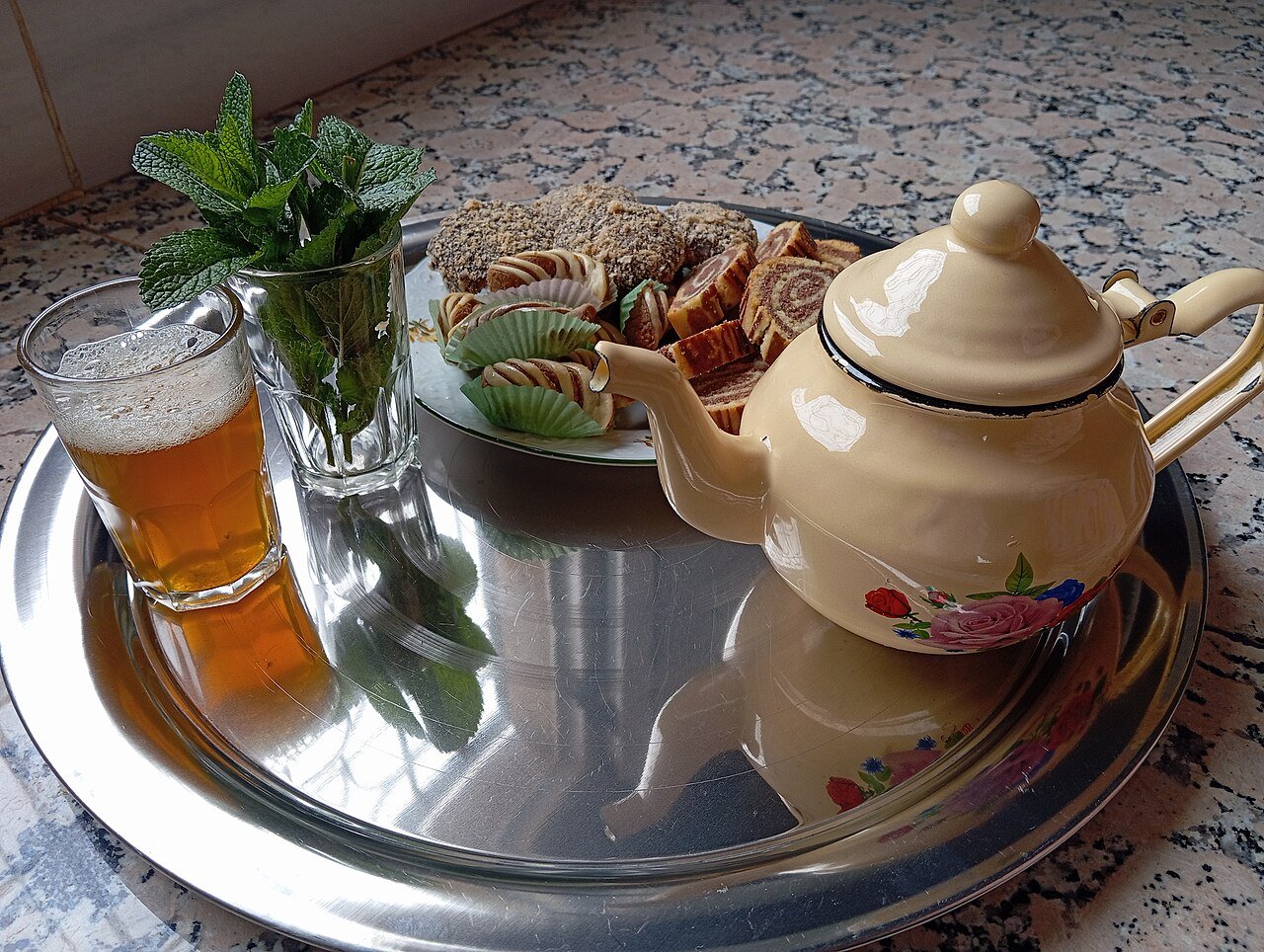
You can brew Moroccan mint tea in any pot, but the classic set makes the ritual easier and looks beautiful on the table.
The teapot
Moroccan teapots are usually stainless steel or plated metal with a long curved spout, which helps with the high pour. Choose one that is safe on the stove, because the recipe uses a short heating step.
The glasses
Small, thick-based glasses of about 3 to 6 oz are typical. Many are etched or painted with gold patterns. The small size keeps the tea hot and makes it easy to serve several rounds.
The tray
A round metal tray holds the pot and glasses and catches drips. In many homes a second tray or box holds the tea, sugar and mint.
No set yet? A heatproof glass or regular mug works fine while you practice. The flavor comes from the leaves and the method, not the pot.
Regional Twists on North African Mint Tea
Moroccan mint tea has close cousins across North Africa. The basic drink changes from country to country, and even from season to season.
Sweet, minty and foamy
Classic Moroccan mint tea uses lots of mint and sugar. In cold months, when mint is scarce, some families add or substitute shiba (wormwood) for a bitter, herbal note.
Mint tea and coffee side by side
Algeria shares the minted green tea tradition, especially in the Sahara, where Tuareg tea is brewed strong and served in rounds. Coffee is also very popular in Algerian cities.
Tea with pine nuts
Tunisians often serve mint tea with a spoonful of pine nuts floating in the glass, and sometimes almonds. The nuts add a toasty, buttery bite.
More ways to vary your pot
Lemon verbena (louiza)
Add a few dried or fresh verbena leaves with the mint for a soft lemon scent. Try Safeya Louiza.
Wormwood (shiba)
Use only a small pinch, as it is strong and bitter. If you are pregnant or nursing, ask a doctor before using it.
Orange blossom water
A few drops in the pot or glass add a gentle floral note, a popular touch for special occasions.
Ready herb blend
A pre-mixed bundle such as Rasila herbal tea saves time when fresh herbs are hard to find.
Honey instead of sugar
Stir in honey after brewing for a softer sweetness. Tayeb eucalyptus honey works well.
Iced mint tea
Brew a pot of Moroccan mint tea, let it cool, then pour over ice with extra mint. It is a refreshing summer drink.
Caffeine and Health Notes
General information only, not medical advice. Moroccan mint tea contains caffeine because it is made with real green tea. The amount in each glass depends on how much tea you use, how long it steeps and the size of the glass. Small Moroccan glasses usually hold less than a standard US mug.
The US Food and Drug Administration cites 400 milligrams a day as an amount not generally linked to negative effects in healthy adults. People who are pregnant, nursing, sensitive to caffeine or taking medication should ask a health care provider.
Green tea is widely studied, but research has not reached firm conclusions on most claimed benefits, according to the National Center for Complementary and Integrative Health. The same source notes that green tea may interact with some medicines, such as the blood pressure drug nadolol.
| Question | Short answer |
|---|---|
| Is it caffeinated? | Yes, from the green tea. Mint itself is caffeine free. |
| Is it very sweet? | Traditional versions are. You can cut the sugar to taste. |
| Can I make it lighter? | Use less tea, a shorter heating time and more mint. |
| Caffeine-free option? | Brew only mint, verbena or other herbs without the green tea. |
What to Serve With Mint Tea
Moroccan mint tea is rarely served alone. A small plate of something sweet or savory is part of the welcome.
Sweets and cookies
Ghriba, chebakia and almond cookies are classic. On busy days, store-bought biscuits are just as welcome. Soft Spofy madeleines and the rest of our Moroccan biscuits are popular with tea.
Breakfast and snacks
Moroccan mint tea is a breakfast staple alongside msemen, baghrir, bread with olive oil, honey or jam. It also pairs well with dates, nuts and olives.
After a big meal
Many families serve Moroccan mint tea after couscous or a tagine. The mint feels fresh after rich, spiced food. If you like heat, it is a great match for dishes made with harissa.
Best Mint Tea Essentials to Buy in the USA
Everything you need for an authentic pot of Moroccan mint tea, shipped to all 50 states. Browse the full tea time and herb collections for more.
 Best gunpowder teaSultan Grain Ambar No.16
Classic pellet green tea with a bold, traditional flavor.
Shop now


Want the full ritual? Pair your tea with Enmer sugar ingots and check our shipping policy for delivery times.
Moroccan Mint Tea FAQs
What kind of tea is used in Moroccan mint tea?
Chinese green tea is the base. Gunpowder tea, with leaves rolled into small pellets, is the most traditional choice, and curled-leaf chunmee teas sold under the code 41022 are also very common.
Does Moroccan mint tea have caffeine?
Yes. The green tea contains caffeine, while the mint does not. The amount per glass depends on how much tea you use and how long it steeps. For a caffeine-free drink, brew mint or other herbs on their own.
Can I use peppermint instead of spearmint?
You can, but the flavor will be sharper and more menthol-like. Spearmint is the traditional choice and gives a softer, sweeter aroma. Most bunches sold simply as mint in US stores are spearmint.
Why is Moroccan mint tea poured from so high?
The high pour mixes the sugar, adds air, cools the tea slightly and creates a light foam on top of the glass. A good foam is often seen as the sign of a well-made pot.
Why does my Moroccan mint tea taste bitter?
The most common causes are too much tea, skipping the rinse, boiling the pot too hard or leaving mint above the waterline where it scorches. Use one heaping tablespoon of tea, rinse it and heat the pot gently.
Can I make it with dried mint or less sugar?
Yes. Dried mint works when fresh mint is not available, though the flavor is milder. You can also reduce the sugar or replace it with honey added after brewing.
How many glasses of Moroccan mint tea are traditionally served?
Hosts usually serve at least three rounds. A popular saying compares the three glasses to life, love and death, because each round tastes different as the leaves keep steeping.
Further reading: Maghrebi mint tea (Wikipedia) · USC Digital Folklore Archives · NCCIH: Green Tea
Brew Your First Pot This Week
Everything for Moroccan mint tea: authentic North African green teas, sugar and herbs, delivered to your door anywhere in the USA.
Shop Tea Time Shop All Products