Algerian Couscous (Kesksou) Sauces, Regional Styles and Recipes
What makes Algerian couscous unique, the red and white sauces, eight regional styles worth knowing, and two tested recipes you can cook in a US kitchen.
Algerian couscous, called kesksou, seksu or simply t’aam (“the food”), is steamed semolina served with a slow-cooked broth of meat, chickpeas and vegetables, made either with a white sauce or a red tomato sauce. The grain is steamed two or three times over the simmering pot until it is light and fluffy. Algeria has hundreds of local versions, from Kabyle vegetable couscous to sweet mesfouf with dates, and many families serve it with a glass of lben (cultured milk).
Your Complete Kesksou Guide
Algerian couscous is the dish of Friday lunch, weddings, funerals and holidays, and the plate a grandmother sends to a neighbor without being asked. In many homes it is not even called couscous. It is t’aam, “the food,” or na’ama, “the blessing,” which tells you how central it is to daily life.
This guide explains how Algerian couscous differs from Moroccan and Tunisian versions, how to choose between a white and a red sauce, and which regional styles to try. You will also get two complete recipes. Stock the grain from our couscous collection and pantry staples from our Algerian products aisle.
Algerian Couscous at a Glance
What Is Algerian Couscous?
Couscous was born with the Amazigh (Berber) peoples of North Africa, and Algeria counts it as a national dish. Historians point to early clay steaming pots found in Kabylia as signs of how old the tradition is. The Tamazight word seksu is the root of the names used across the Maghreb today.
What makes Algerian couscous distinct is its range. Food writers often say the country has more than 300 ways to prepare it. The broth can be white or red, the topping can be lamb, chicken, beef, fish, dried meat or only vegetables, and the grain can be wheat, barley or even sweet and buttered.
Compared with its neighbors, Algerian couscous tends to be less spicy than Tunisian kosksi and less sweet than Moroccan couscous with tfaya. The broth is usually served on the side, so each person moistens the grain to taste.
Algerian Couscous Sauces: Red or White?
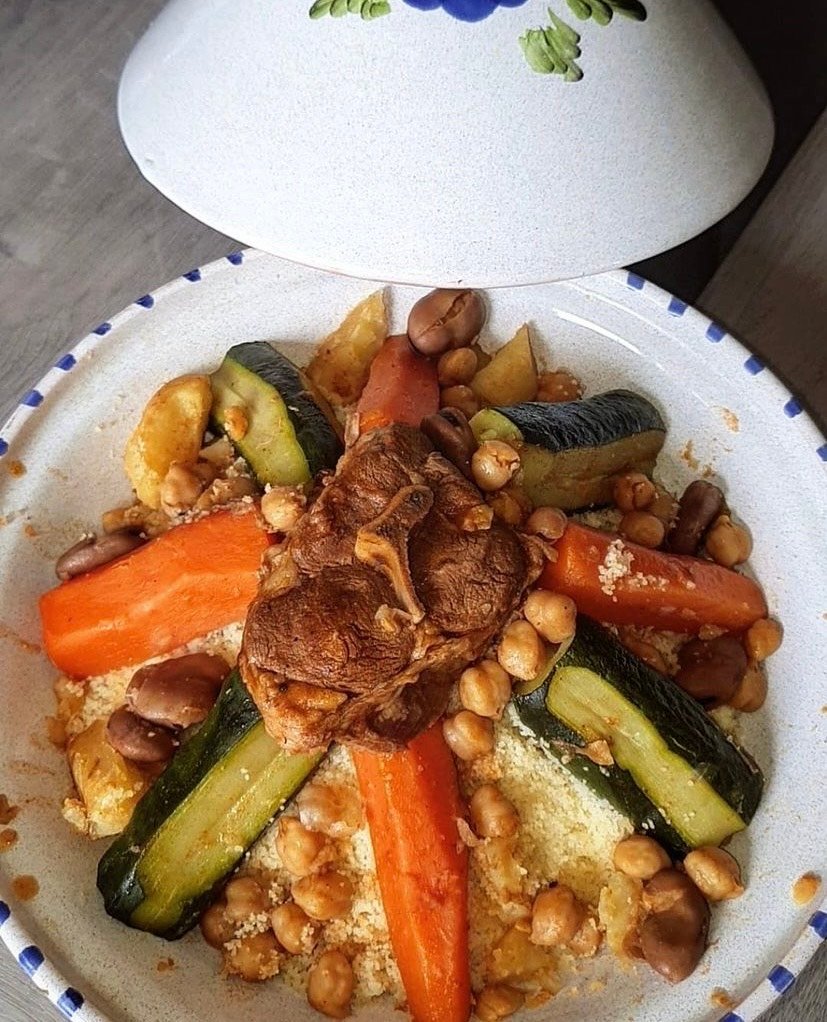
Ask an Algerian cook which sauce is “correct” and you will start a friendly argument. Both are traditional. The white sauce, marqa bayda, is gentle and aromatic. The red sauce, marqa hamra, gets its color from tomato paste and paprika, and in the east it often carries chili heat.
| Feature | White sauce (marqa bayda) | Red sauce (marqa hamra) |
|---|---|---|
| Color | Pale gold, clear broth | Orange to deep red |
| Base flavors | Onion, black pepper, cinnamon, a little turmeric or saffron | Tomato paste, sweet paprika, black pepper, sometimes harissa |
| Most common with | Chicken, lamb, turnips, zucchini, chickpeas | Lamb or beef, carrots, squash, potatoes, green beans |
| Where you see it | Algiers and central Algeria, festive tables | Everyday family cooking, especially in the east and Kabylia |
| Heat | Mild | Mild to hot, depending on the region |
| Garnish | Boiled eggs, chickpeas, sometimes fried meatballs | Whole green chilies, extra sauce on the side |
A good rule: choose the white sauce for chicken and celebrations, and the red sauce for a hearty weeknight pot. Both recipes are below, and the method for the grain is the same.
The Algerian Couscous Pantry
Most of what you need keeps for months. Once these staples are in the cupboard, a pot of kesksou is just a matter of fresh vegetables and meat.
Choosing the grain
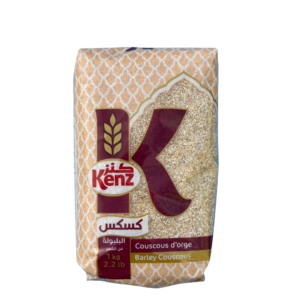
Medium couscous is the everyday choice for meat and vegetable dishes. Fine couscous is used for sweet mesfouf and seffa because it turns soft and delicate. For a rustic, nutty version, try barley couscous, known in Algeria as mermez or belboula. All three are on our couscous shelf.
Fat: olive oil, butter or smen
Algerian cooks rub the steamed grain with olive oil between steamings and finish it with butter or smen, an aged butter with a tangy aroma. A fruity Algerian extra virgin olive oil gives the most authentic result.

Spices for Algerian couscous
| Spice | Role | Amount for 6 | Try |
|---|---|---|---|
| Black pepper | The main warmth in white sauce | 1 to 1 1/2 tsp, freshly ground | Whole black pepper |
| Cinnamon | Sweet, warm note; a stick or a pinch | 1 stick or 1/2 tsp ground | Casablanca cinnamon sticks |
| Sweet paprika | Color and body for red sauce | 1 tbsp | Sweet paprika |
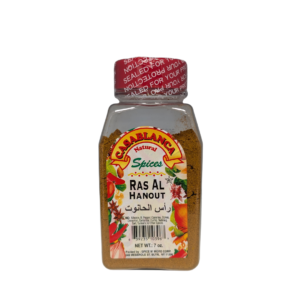
| Ras el hanout | A rounded blend many families add | 1 tsp | Ras el hanout |
| Ginger | Gentle heat, good with chicken | 1/2 tsp ground | Casablanca ground ginger |
| Tomato paste | Base of the red sauce | 2 to 3 tbsp | Tayeb tomato paste |
Algerian Couscous With Chicken in White Sauce
This white Algerian couscous serves 6 and is the version many families make for guests. The broth simmers in the bottom of the pot while the grain steams on top.
Ingredients
- 3 lb bone-in chicken pieces (thighs and drumsticks), skin removed if you like
- 1/4 cup olive oil, plus 2 tbsp for the grain
- 2 medium onions, finely chopped
- 1 tsp black pepper, 1/2 tsp ground cinnamon or 1 stick, 1/2 tsp ginger, 1/4 tsp turmeric
- 2 tsp salt, plus more to taste
- 1 cup dried chickpeas soaked overnight, or one 15 oz can, drained
- 3 turnips, peeled and quartered
- 3 carrots, halved lengthwise
- 3 zucchini, cut into large chunks
- A small bunch of parsley or cilantro, tied
- About 10 cups water
- 1.5 lb (about 700 g) medium couscous
- 3 tbsp butter or 1 tbsp smen
Method
- Start the broth. In the bottom of a couscoussier or large pot, cook the chicken, onions, oil, salt and spices over medium heat for 10 minutes, stirring, until the onions soften.
- Add water and chickpeas. Add the soaked chickpeas, the herb bundle and about 10 cups of water. Bring to a boil, then simmer, partly covered.
- First steaming. Moisten and oil the couscous and steam it over the pot for 15 to 20 minutes, as described in the steaming section below.
- Add the vegetables. After 25 minutes add turnips and carrots. Add zucchini (and canned chickpeas) 15 minutes later.
- Second steaming. Fluff the grain with salted water, return it to the basket and steam 15 to 20 minutes more.
- Taste. The broth should be well seasoned and peppery. Remove the herb bundle and the cinnamon stick.
- Finish the grain. Rub the hot couscous with butter or smen until every grain shines.
- Serve. Mound the grain on a wide platter, arrange chicken and vegetables on top and serve the broth in a bowl so everyone can ladle their own.
Red Algerian Couscous With Lamb and Vegetables
This red sauce Algerian couscous is the hearty family pot, close to what you would eat in Kabylia or the east. Serves 6.
Ingredients
- 2 lb lamb shoulder or neck on the bone, in 6 pieces
- 1/4 cup olive oil
- 1 large onion, grated
- 3 tbsp tomato paste
- 1 tbsp sweet paprika, 1 tsp black pepper, 1 tsp ras el hanout
- 1/2 to 1 tbsp harissa (optional)
- 2 tsp salt
- 1 cup soaked chickpeas, or one 15 oz can
- 3 carrots, 2 potatoes, 1 wedge of butternut squash, 2 zucchini, all in large chunks
- 1 cup green beans, trimmed
- About 10 cups water
- 1.5 lb medium couscous, 2 tbsp oil and 2 tbsp butter
Method
- Brown. Brown the lamb with the onion, oil and salt for 8 to 10 minutes.
- Color the sauce. Stir in tomato paste, paprika, pepper, ras el hanout and harissa. Fry for 2 minutes until the oil turns red.
- Simmer. Add chickpeas and water and simmer for 45 minutes while you steam the grain above.
- Vegetables in stages. Carrots and potatoes first, then green beans, then squash and zucchini for the last 15 minutes.
- Finish. Butter the steamed grain, top with lamb and vegetables and serve the red broth on the side.

Make it vegetarian
Skip the meat and double the chickpeas and vegetables. Cook the onion and spices in oil, add water and vegetables in stages, and simmer for about 40 minutes. A vegetable Algerian couscous is common on weeknights and during hot summers.
Make it ahead
The lamb sauce tastes even better the next day. Refrigerate it for up to 2 days, reheat, and steam fresh grain over it just before serving.
Quick weeknight shortcut
Most packaged couscous is pre-steamed. Pour 1 1/4 cups of hot strained broth over each cup of grain, cover for 5 to 7 minutes, fluff and butter. It is denser than the steamed version, but still good.
8 Regional Styles of Algerian Couscous
Every region, and nearly every family, has its own Algerian couscous. These eight styles are a good map of the variety you may meet at an Algerian table.
Couscous algérois
Lamb or beef with chickpeas, carrots and squash, often in a white sauce. Elegant and mild.
Kabyle seksu
Red tomato sauce with green beans, carrots, squash and meat, cooked in the couscous pot.
Fish couscous of Jijel
Sea bass or snapper with tomatoes and bell peppers, a specialty of the eastern coast.
Mesfouf with fava beans
Couscous tossed with olive oil and fresh beans or peas, served with cultured milk.

Mesfouf with dates
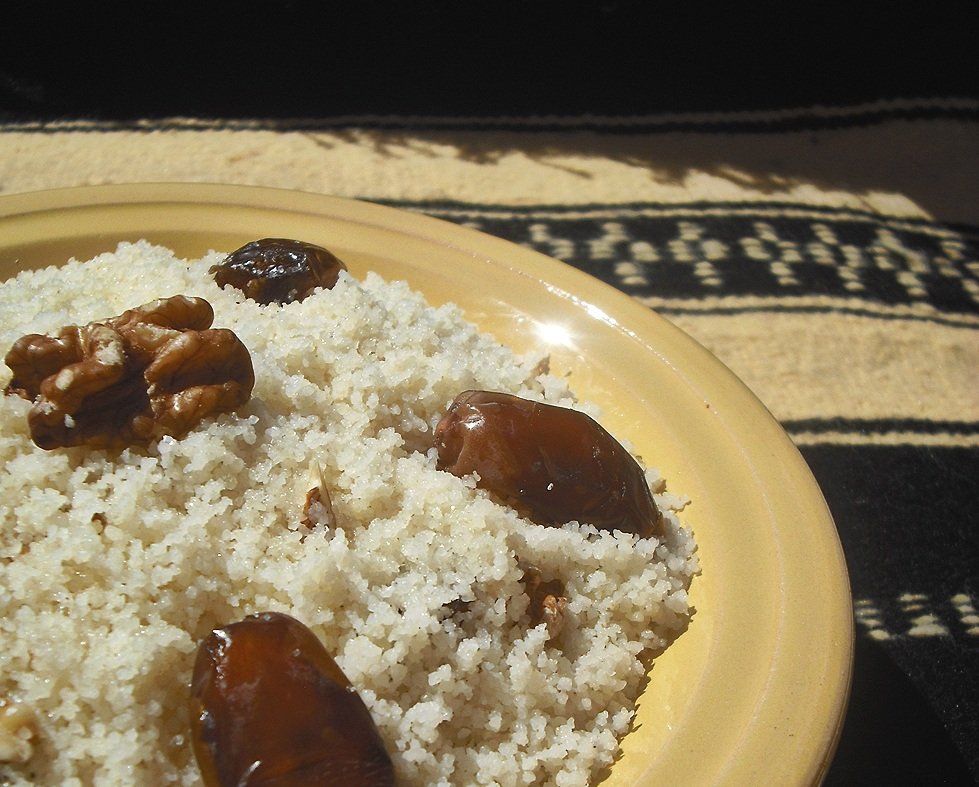
Fine couscous with butter and Deglet Nour dates, sweetened only by the fruit.
Seffa
Steamed fine couscous with butter, raisins, cinnamon and powdered sugar, sometimes over shredded chicken.
Barley couscous
Mermez or belboula: nutty barley grain, popular in the countryside with vegetables and lben.
Berkoukes
Large hand-rolled pellets cooked directly in a thick tomato soup, a cold-weather comfort dish.
White or red, broth on the side
Algerian couscous offers both sauce styles and loves cultured milk. Try Dari medium couscous.
Red and spicy
Kosksi mixes harissa-red sauce into the grain and loves fish. Keep a Cap Bon harissa tube nearby.
Golden and sweet-topped
Moroccan couscous is golden and mild, often crowned with seven vegetables and tfaya. Try Alitkane medium couscous.
How to Steam Kesksou Like an Algerian Grandmother
The secret of great Algerian couscous is patience with the grain. It is moistened, rubbed by hand and steamed two or three times, so each grain swells and stays separate. The pot is a keskas or couscoussier: a deep pot for the broth with a perforated basket on top.
No couscoussier? Set a metal colander lined with cheesecloth over a pot that fits snugly. Wrap a damp kitchen towel around the joint so all the steam rises through the grain.
Coat the grain
Spread the couscous in a wide bowl, drizzle with 2 tbsp olive oil and rub between your palms so every grain is coated.
Add salted water
Sprinkle about 1 cup of lightly salted water over the grain, rubbing as you go. Rest 10 minutes.
First steaming
Pile the grain loosely into the basket over the boiling broth. Steam uncovered for 15 to 20 minutes once steam rises through the top.
Break the lumps
Tip it back into the bowl, sprinkle with another cup of water and break clumps with a wooden spoon, then oiled hands once cool enough.
Second steaming
Return to the basket for another 15 to 20 minutes. Many Algerian cooks do a third short steaming for extra fluffiness.
Finish with fat
Rub in butter or smen while hot. Keep the grain covered with a cloth, not a lid, until you serve.
How Algerian Couscous Is Served
Traditionally, Algerian couscous arrives in one large shared dish, a wooden or earthenware gasaa, set in the middle of the table. The meat and vegetables sit on top, and a bowl of broth goes around so each person moistens their own section.
In many families couscous is a Friday lunch after prayers. It also marks the big moments of life: weddings, births, the return of a pilgrim, and gatherings after a funeral, when neighbors cook couscous for the grieving family. The UNESCO couscous listing describes exactly this role in solidarity and hospitality.
Couscous is also the traditional meal of Yennayer, the Amazigh New Year celebrated in mid-January, when many Algerian families cook a generous pot to welcome the year.
What to serve with Algerian couscous
- A glass of lben or buttermilk; the cool tang balances a peppery broth.
- Extra broth, and a small dish of harissa thinned with a little broth.
- Fresh salads, such as chopped tomato, cucumber and onion, or roasted pepper salad.
- Bread for the vegetables, and olives from our olives and pickles shelf.
- Mint tea or coffee with something sweet afterwards, such as Algerian biscuits.
Leftovers
Keep grain and broth separate in the fridge for up to 3 days. Reheat the grain by steaming it again for 10 minutes, or sprinkle it with water, cover and microwave for 2 to 3 minutes. Leftover plain grain becomes a quick breakfast mesfouf with butter, sugar and raisins.
Best Algerian Couscous Essentials to Buy in the USA
The grain, the oil, the spices and the heat for a proper pot of kesksou, shipped to all 50 states.
 Best everyday grainDari Medium Couscous
A reliable medium grain for white or red sauce couscous.
Shop now
 Algerian oilAkfadou Extra Virgin Olive Oil
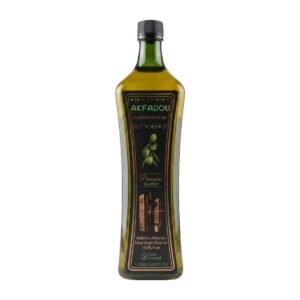
Fruity oil from Algeria for the grain and the sauce.
Shop now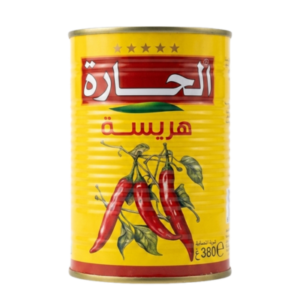
Want more? Browse all spices, read our harissa guide, and check the shipping policy for delivery times.
Algerian Couscous FAQs
What is the difference between Algerian couscous and Moroccan couscous?
The grain and the steaming method are the same. Algerian couscous is usually served with a white or red broth on the side and is often eaten with cultured milk, while Moroccan couscous is typically golden and mild and is often topped with seven vegetables and sweet caramelized onions.
What is Algerian couscous called in Algeria?
It is called kesksou or seksu, from the Tamazight word, and many families simply call it t’aam, meaning the food, or na’ama, meaning the blessing.
Is Algerian couscous spicy?
Usually not. The white sauce is mild and peppery. The red sauce can be mild or hot depending on the region, and in eastern Algeria cooks often add chili or harissa. You can always serve harissa on the side.
What is the white sauce in Algerian couscous?
Marqa bayda is a clear, pale broth of meat or chicken with onion, black pepper, cinnamon and sometimes a little turmeric or saffron. It has no tomato, which keeps it light and aromatic.
Why do Algerians eat couscous with milk?
Lben, a tangy cultured milk, has been part of rural North African meals for generations. Its cool, sour taste balances a warm, peppery broth, and some styles such as mesfouf with beans are traditionally served with it.
Which couscous grain is best for Algerian couscous?
Medium grain is the classic choice for meat and vegetable dishes. Fine grain suits sweet mesfouf and seffa, and barley couscous gives a rustic, nutty version.
Can I make Algerian couscous without a couscoussier?
Yes. Steam the grain in a cheesecloth-lined colander set snugly over the pot, sealing the gap with a towel. For a quick version, pour hot broth over pre-steamed couscous, cover for 5 to 7 minutes and fluff.
Is couscous on the UNESCO heritage list?
Yes. In 2020 UNESCO inscribed the knowledge, know-how and practices of couscous as intangible cultural heritage, after a joint nomination by Algeria, Mauritania, Morocco and Tunisia.
Further reading: Algerian couscous (Wikipedia) · Clifford A. Wright: Algerian cuisine · UNESCO: Couscous heritage
Cook Algerian Couscous This Friday
Couscous, Algerian olive oil, harissa and spices, delivered to your door anywhere in the USA.
Shop Couscous Shop All Products