How to Use a Henna Cone for Beautiful, Lasting Designs
Skin prep, how to hold and squeeze the cone, step-by-step application, aftercare for a darker stain, safety checks and the North African traditions behind every design.
To use a henna cone, snip a tiny opening at the tip, hold the cone like a pen and squeeze gently from the top while you lay a raised line of paste on clean, lotion-free skin. Let the design dry, seal it with a dab of lemon and sugar, and leave the paste on for at least 4 to 6 hours, or overnight. Scrape it off without water. The stain starts orange and darkens to reddish brown over about two to three days.
Your Complete Henna Cone Guide
A henna cone looks simple: a small paper or plastic cone filled with paste. Yet the first time you squeeze one, it can feel like icing a cake with your eyes closed. The lines come out thick, the paste blobs, and the tip clogs at the worst moment.
The good news is that a henna cone rewards practice quickly. With the right grip, steady pressure and a little patience, most beginners draw neat vines, dots and fingertip designs within an afternoon. This guide covers every step, from skin prep to aftercare, plus ready-to-use cones from our henna collection.
Henna Cones at a Glance
What Is a Henna Cone?
A henna cone is a small piping bag for body art. It holds a smooth paste made from dried, finely sifted henna leaves mixed with liquid, and its narrow tip lets you draw fine lines on skin, much like a pastry bag pipes frosting.
The color comes from lawsone, a natural dye in henna leaves. When the paste sits on skin, lawsone moves into the outer layer and binds to the proteins there. That is why henna stains rather than paints, and why the stain fades as skin naturally sheds.
Ready-made vs fresh henna cones
There are two main kinds. Ready-made, shelf-stable cones, like our Golecha and Lajwa cones, are sealed and ready to use straight from the pack, which makes them ideal for beginners, parties and Eid. Fresh cones are mixed by hand from henna powder, used within days and often stored frozen by professional artists.
Whichever henna cone you choose, read the label. Natural henna always stains orange first and then darkens; a paste that turns skin black within minutes is not natural henna.
Henna in Morocco, Algeria and Tunisia
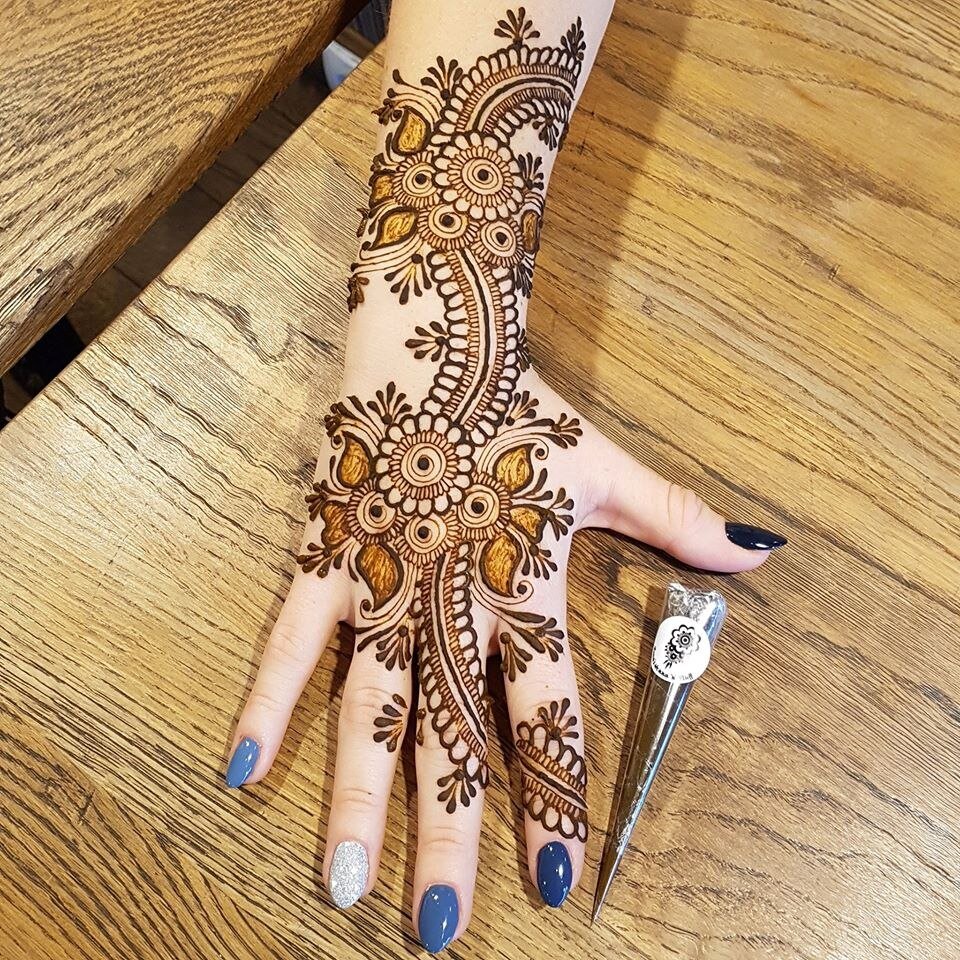
Across the Maghreb, henna marks the happiest moments of life. Brides have their hands and feet decorated at a henna night before the wedding, families gather to apply it before Eid, and little girls often get a simple dot on the palm for celebrations.
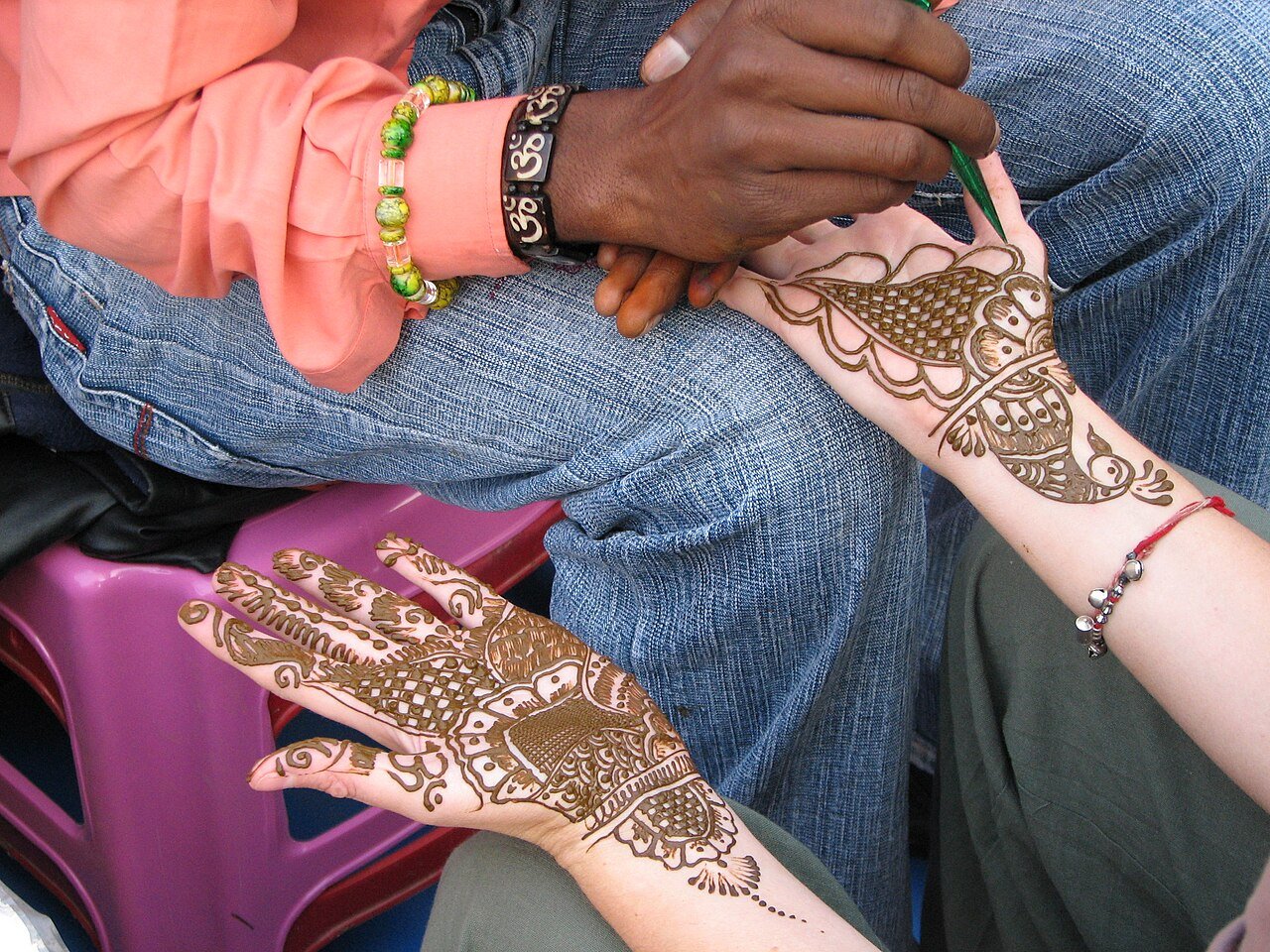
Traditional Moroccan artists, called nekkacha, have long used a syringe or a fine stick rather than a cone, and many still do. Designs vary by region: fine geometric patterns linked with Fez, bold Saharan motifs in the south, and flowing floral work influenced by the Gulf and India.
In December 2024, UNESCO added “Henna: rituals, aesthetic and social practices” to its list of intangible cultural heritage, after a joint nomination by 16 Arab states including Morocco, Algeria and Tunisia. You can read the UNESCO decision online.

Before You Open Your Henna Cone
Good results start before the first line. Spend 15 minutes on these steps and your cone will stain deeper and more evenly.
Exfoliate gently
Wash and lightly scrub the area the day before, not right before you draw. Many Moroccan women use black soap at the hammam ahead of a henna night.
Clean, bare skin
Wash with plain soap and dry well. Skip lotion, oil and sunscreen on the area, since they create a barrier that weakens the stain.
Patch test
Dab a little paste on your inner arm and wait 24 to 48 hours, especially if it is your first cone or a new brand. Any itching or redness means do not use it.
Room temperature paste
If you keep cones in the fridge, let the cone sit out for about 30 minutes. Cold paste is stiff and hard to squeeze.
Gather supplies
Small scissors, a pin, paper towels, cotton swabs, a sketch on paper and a comfortable seat with good light.
Test on paper
Squeeze a few lines and dots on paper or a plastic sheet to feel the flow before you touch skin.
How to Use a Henna Cone Step by Step
This method suits any ready-made cone. Allow about 20 to 40 minutes for a simple hand design, plus drying and waiting time.
You will need
- 1 ready-to-use henna cone
- Small sharp scissors and a pin
- Paper towels and cotton swabs for mistakes
- 1 tablespoon lemon juice and 1 tablespoon sugar (for the sealant)
- Medical tape or a loose cotton wrap (optional)
- A light oil or balm for removal day
Timing
- Drawing: 20 to 40 minutes
- Drying: 20 to 30 minutes
- Paste on skin: 4 to 6 hours minimum, up to overnight
- Full color: 48 to 72 hours
Method
- Knead the cone. Gently roll the cone between your fingers for a few seconds so the paste is smooth and even.
- Snip the tip. Cut the smallest possible piece off the very tip, about 1 mm. You can always cut more; you cannot make the hole smaller.
- Test the flow. Squeeze a line on a paper towel. If the paste does not come out, snip a hair more or clear the tip with a pin.
- Hold it like a pen. Grip the cone near the top with your writing hand, and support it lightly with the other hand if you need to.
- Lift, don’t drag. Touch the tip to skin, start squeezing, then lift slightly so the paste falls onto the skin in a raised line rather than being scraped across it.
- Work from the center out. Start with the main motif, then add vines, dots and fingertips, keeping your hand off fresh paste.
- Fix mistakes fast. Wipe errors right away with a damp cotton swab, before the paste has time to stain.
- Let it dry. Rest for 20 to 30 minutes until the surface looks matte and slightly cracked.
- Seal it. Mix lemon juice and sugar, then dab a thin layer on with a cotton ball. It keeps the paste moist and stuck to skin.
- Wait. Leave the paste on for at least 4 to 6 hours. Overnight, loosely wrapped, gives the darkest result.
- Scrape, don’t wash. Remove the dry paste with a blunt edge or fingernail. Rub a little oil over the area, and avoid water for as long as you can.

Henna Cone Tips for Cleaner Lines
These small habits separate wobbly first attempts from smooth, confident designs.
Squeeze from the top
Press near the folded top, not the middle. As the cone empties, fold or roll the top down to keep pressure even.
Keep it steady
Even pressure gives even lines. Squeeze harder for thick lines and lighter for fine detail, but avoid sudden squeezes.
Move at a calm pace
Moving too slowly makes blobs; moving too fast breaks the line. A steady, relaxed speed works best.
Dots and teardrops
For a dot, touch, squeeze, stop, then lift. For a teardrop, squeeze while pulling away and ease off at the end.
Clear the tip
If the henna cone stops flowing, wipe the tip and clear it with a pin rather than squeezing harder, which can burst the seam.
Wipe as you go
Keep a folded paper towel nearby and wipe the tip every few strokes to stop dried paste from building up.
Rest your hand
Anchor your little finger on clean skin or the table. A stable hand draws straighter lines.
Thicker paste, darker stain
A generous, raised line of paste stays moist longer and usually stains darker than a thin scratchy one.
Easy Henna Cone Designs for Beginners
Start small and build up. These ideas range from five-minute patterns to fuller festive looks.
Dipped fingertips
Fill the top of each fingertip with solid paste, a classic North African look that stains very dark.
Center palm dot
A single round dot or flower in the palm, often given to children at celebrations.
Vine up the finger
A curling line with small leaves running from fingertip to the back of the hand.
Geometric bands
Straight lines, triangles and small diamonds in a bracelet-style band, inspired by Fez patterns.
Bold block motifs
Thick lines and filled shapes, simple to draw and striking once stained.
Floral mandala
A flower in the center of the back of the hand with petals and dotted outlines for Eid or a wedding.
How to Get a Darker Stain From Your Henna Cone
The work is not finished when you put the cone down. What you do in the next 24 hours has a big effect on how dark and long-lasting the color becomes.
Keep it warm and on
Leave the paste on as long as you comfortably can. Warmth helps, so many people wrap the design loosely in tissue and cotton overnight. Palms and soles always stain darkest because the skin there is thicker.
Avoid water at first
Try to keep the area dry for 12 to 24 hours after removal. Water, soap and hand sanitizer can slow the darkening. If you must wash, rub a little balm or oil over the stain first.
Moisturize later
Once the color has developed, a few drops of a natural oil such as ITTO pure argan oil keep the skin soft and can help the design fade more evenly.

Henna cone stain timeline
| When | What you see | What to do |
|---|---|---|
| While drawing | Dark green to brown paste | Keep fresh lines untouched |
| 20 to 30 minutes | Paste dries and looks matte | Seal with lemon and sugar |
| 4 to 12 hours | Paste dry and cracking | Keep it warm; wrap loosely overnight |
| Removal | Bright orange stain | Scrape off; no water; a little oil |
| 24 hours | Orange turning red-brown | Keep avoiding long soaks |
| 48 to 72 hours | Deepest reddish brown | Enjoy; moisturize |
| 1 to 3 weeks | Gradual fading | Gentle care slows fading |
Henna Cone Safety and the Truth About Black Henna
Natural henna is used safely by millions of people, but not every product sold as henna is natural. This is general information only, not medical advice.
Avoid “black henna”
So-called black henna is often darkened with PPD, a hair dye chemical that can cause severe skin reactions and lasting sensitivity. Natural henna is never jet black.
What the FDA says
In the US, henna is approved as a color additive only for hair dye, not for direct use on skin. The FDA advises caution and checking ingredient labels.
Babies and G6PD
Medical case reports link henna to serious reactions in babies and children with G6PD deficiency. Do not use henna on infants, and ask a doctor before using it on children.
Broken or irritated skin
Never apply a cone over cuts, rashes, eczema flares or sunburn. Wait until the skin has healed.
Know the signs
Itching, burning, blistering or raised redness are not normal. Remove the paste, rinse and seek medical advice if symptoms are strong.
Read before you buy
Look for an ingredient list and avoid any cone that promises a black stain or results in minutes.
For more detail, see the FDA’s fact sheet on henna and black henna.
Storing a Henna Cone and Making Your Own
Store unopened ready-made cones in a cool, dark place away from sunlight; many brands suggest the fridge for longer life. Bring a chilled cone back to room temperature before drawing.
Once opened, seal the tip with a small piece of tape or a pin and use the cone within a few weeks. If the paste becomes dry, grainy or hard to squeeze, it is time for a fresh one.
How to roll a DIY henna cone
Artists who mix their own paste roll cones from a rectangle of cellophane or mylar. Roll it into a tight point, tape the seam, fill it about half to two-thirds full, fold the top over and tape it shut. Snip the tip only when you are ready to draw.
Fresh paste is made from body-art-quality henna powder, lemon juice or water, a little sugar and sometimes an essential oil, then left to release its dye. Our store does not currently sell henna powder for skin, so for a quick and tidy start, a ready-made cone is the easier choice. For a deeper look at the plant and its traditions, the Wikipedia entry on henna is a good starting point.
Best Henna Cone Picks to Buy in the USA
Ready-to-use cones and simple aftercare extras, shipped to all 50 states.



 For the sealantEnmer Sugar Cubes
Dissolve a cube in lemon juice for the classic sealant, and use the rest for mint tea.
Shop nowPlanning a full beauty day? Browse our Moroccan cosmetics, and check our shipping policy so your cones arrive before the big day.
Henna Cone FAQs
How long should you leave henna from a henna cone on?
Leave the paste on for at least 4 to 6 hours. For the darkest, longest-lasting stain, many people keep it on overnight, loosely wrapped to stay warm, then scrape it off without water.
Why is my henna stain orange?
Natural henna always looks orange when you first remove the paste. The stain oxidizes and darkens to reddish brown over about 48 to 72 hours, so judge the final color on day two or three.
How do you open a new henna cone?
Roll the cone gently to smooth the paste, then snip the smallest possible piece off the tip, about 1 mm. Test the flow on a paper towel and cut a little more only if the paste will not come out.
What do you do if a henna cone is clogged?
Wipe the tip, then gently clear it with a pin. Avoid squeezing harder, which can split the cone. If the paste inside has dried out, it is best to switch to a fresh cone.
How long does a henna design last?
A henna design usually lasts about 1 to 3 weeks. Palms and soles hold color longest, while the backs of hands and arms fade faster. Frequent washing, swimming and scrubbing speed up fading.
Is it safe to use a henna cone on kids?
Never use henna on babies, and ask a doctor before using it on children, especially if G6PD deficiency runs in the family. Do a patch test first and never use black henna. This is general information only, not medical advice.
How should you store a henna cone?
Keep unopened cones in a cool, dark place, or in the fridge if the brand suggests it, and bring them to room temperature before use. After opening, tape the tip closed and use the cone within a few weeks.
Can you use a henna cone on hair?
A henna cone is made for drawing on skin and holds far too little paste for hair. Hair coloring uses henna powder mixed into a larger batch of paste and applied with gloves or a brush.
Further reading: FDA: Henna and black henna · UNESCO: Henna rituals and practices
Get Ready for Your Next Henna Night
Ready-to-use henna cones and Moroccan beauty extras, delivered anywhere in the USA.
Shop Henna Cones Shop All Products