Chebakia Recipe Moroccan Honey and Sesame Cookies for Ramadan
Learn the spices and sesame that give it its flavor, how to fold the famous flower shape, how to fry and soak it in honey, and how to store a big batch for the whole month.
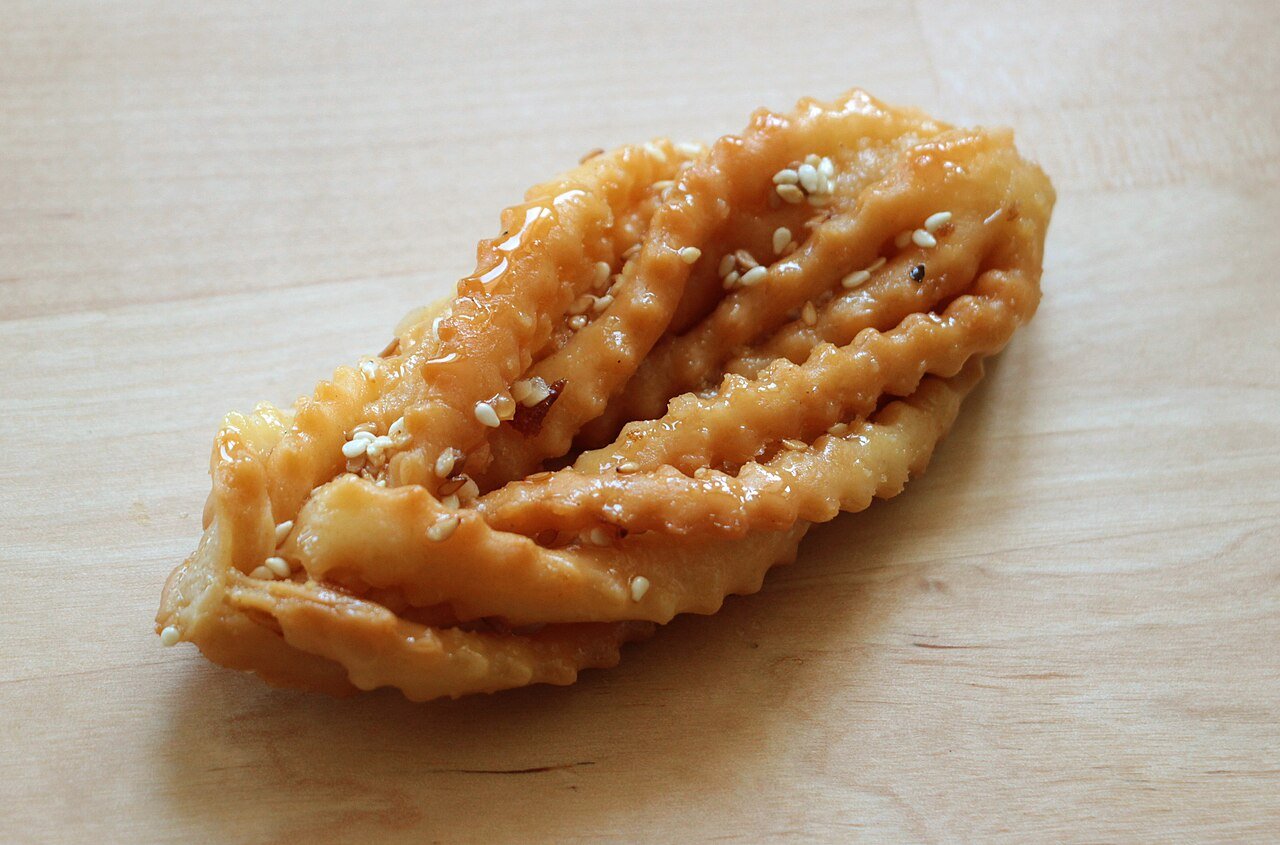
Chebakia is a Moroccan cookie made from a sesame, anise and saffron dough that is folded into a flower shape, deep-fried, soaked in hot honey with orange blossom water and coated in sesame seeds. It is the signature sweet of Ramadan in Morocco, where it is served at iftar next to a bowl of harira. One batch takes an afternoon, but the cookies keep for weeks in an airtight tin.
Your Complete Chebakia Guide
If you have ever broken the fast in a Moroccan home, you have probably seen a tray of them: dark, glossy, sticky little flowers covered in sesame. They are crunchy on the edges, chewy in the middle and fragrant with anise, cinnamon and orange blossom. For many families, making them is the first sign that Ramadan is coming.
This guide walks you through a reliable home recipe, the folding technique that scares most beginners, and the mistakes that lead to soft or burnt cookies. Most of the flavor comes from good sesame, honey and spices, and you can find all of them in our Moroccan baking essentials and Moroccan spices collections.
Chebakia at a Glance
What Is Chebakia?
Chebakia (also spelled shebakia or chebbakia, Arabic شباكية) is a rolled and fried pastry from the Maghreb. The dough is rich with toasted ground sesame and flavored with anise, cinnamon and saffron. After frying, each piece is plunged into warm honey and finished with a shower of sesame seeds.
The name is often linked to the Arabic word shubbak, meaning window, because the folded dough has an open, lattice-like look. A popular Moroccan folk tale even tells of a pastry seller who shaped his honey cookies like a window to win the heart of a girl he saw at hers.
Its exact origin is debated. The English Wikipedia entry on chebakia notes that some writers suggest an Ottoman-era link, pointing to related fried pastries in the eastern Mediterranean, while other sources simply describe it as a Maghrebi creation.
What does chebakia taste like?
Think of a crisp, nutty cookie in a thin coat of floral honey. Sesame gives toasty depth, anise a light licorice note, and cinnamon and saffron warmth. It should be sweet but not cloying, crunchy outside and slightly chewy within.

Chebakia Names Across the Maghreb
The same honey-soaked flower goes by many names, and each region has its own shape, size and spice mix. Here are the ones you are most likely to hear.
| Name | Where you hear it | Notes |
|---|---|---|
| Chebakia / shebakia | Most of Morocco and the diaspora | Today the most common name, especially from the south of the country and in Europe and the USA |
| Mkharqa | Rabat and other central cities | Means roughly “torn” or “holed,” a nod to the openwork shape |
| Griwech / griouech | Algeria, and older families in Fez | Often braided or twisted, with a very crisp texture |
| Bouchnikha | Agadir and the Souss | Thin, thread-like dough coiled into nests |
Chebakia and Algerian griwech
In Algeria, the close cousin is griwech, well known in Oran and served at Eid as well as during Ramadan. Historical studies cited on Wikipedia list griwech among the sweets families offered visitors after Eid prayers in the Ottoman period, alongside coffee or sherbet.
Griwech dough is usually rolled and braided rather than folded into a flower, and many versions use less sesame in the dough. The honey bath and sesame topping are the same, so the two taste like siblings.
The French Wikipedia article also notes that in parts of northern Morocco the same word can refer to a local style of zlabia, which is one reason recipe names can be confusing online.
Chebakia Ingredients That Matter Most
The dough looks like a simple cookie dough, but a few ingredients make the difference between a cookie that tastes authentic and one that tastes like a plain fried biscuit.
Toasted sesame seeds
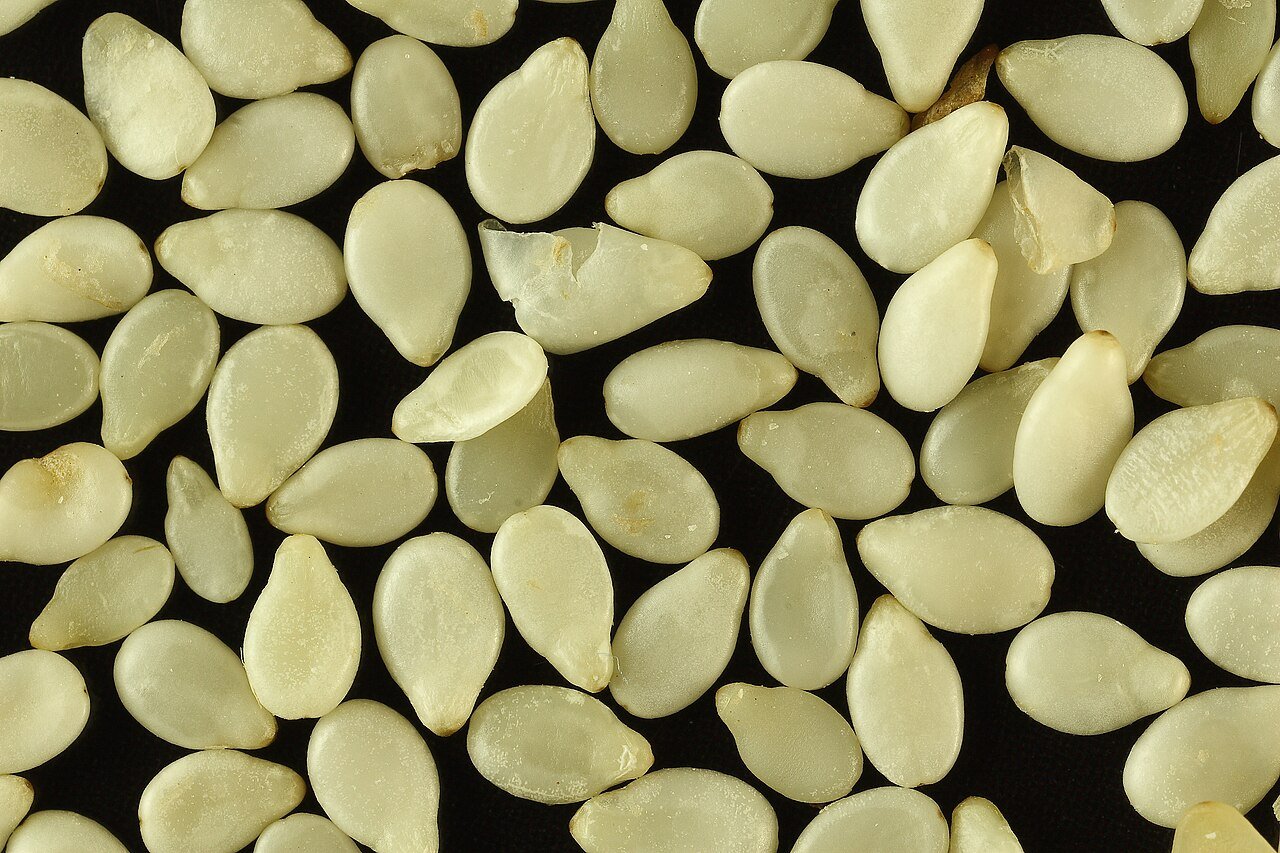
Sesame is the backbone. Most recipes toast the seeds, then grind them finely and work them into the flour, so you get flavor in every bite, not just on the surface. Buy plain hulled sesame seeds and keep extra for the topping.
Anise, fennel and cinnamon
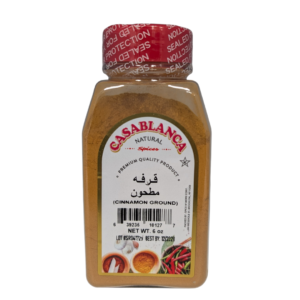
Ground anise gives the classic aroma. Many cooks also add a little ground fennel and a generous pinch of cinnamon. Our ground anise, fennel seeds and ground cinnamon cover all three.
Saffron and orange blossom
A few threads of saffron soaked in warm orange blossom water color the dough golden and scent it gently. Real Moroccan saffron goes a long way, since a single gram holds well over a hundred threads.
Honey
You need a lot, usually 2 to 3 pounds for a full batch. A mild, runny honey such as Tayeb eucalyptus honey works well and can be reused for a second round of frying.
Orange blossom
Used in the dough and the honey. Pure flower water is best; a flavoring such as Samra orange blossom aroma is stronger, so use it by the teaspoon.
Butter, oil, egg and vinegar
Melted butter and olive oil make the dough tender, the egg binds it, and a spoonful of vinegar helps keep the fried cookies crisp.
Mastic or gum arabic
Some families add a crushed pinch for a resinous note. We do not sell it, but specialty Middle Eastern grocers do. The cookies are still delicious without it.
How to Make Chebakia Step by Step
This home-style recipe makes roughly 60 to 80 cookies, depending on size. Every family has its own version, so treat the spice amounts as a starting point and adjust next time.
Dough
- 3 1/2 cups (about 500 g) all-purpose flour
- 1 1/2 cups (about 200 g) sesame seeds, toasted and finely ground
- 1 teaspoon ground anise
- 1/2 teaspoon ground fennel (optional)
- 1 teaspoon ground cinnamon
- 1/2 teaspoon salt
- 1/2 teaspoon instant yeast or baking powder
- A generous pinch of saffron threads, soaked in 2 tablespoons warm orange blossom water
- 1 large egg
- 1 tablespoon white vinegar
- 1/2 cup (115 g) unsalted butter, melted
- 1/4 cup olive oil
- About 1/4 cup orange blossom water plus a little cold water, as needed
For frying and soaking
- 4 to 6 cups neutral vegetable oil
- 2 to 3 lb (about 1 to 1.4 kg) honey
- 2 tablespoons orange blossom water
- 1/2 to 3/4 cup whole toasted sesame seeds for the topping
Method
- Toast the sesame. Spread the seeds on a sheet pan and toast at 350°F for about 10 minutes, stirring once, until golden and fragrant. Cool completely, set some aside for the topping and grind the rest to a fine, slightly oily powder.
- Mix the dry ingredients. In a large bowl combine the flour, ground sesame, anise, fennel, cinnamon, salt and yeast.
- Add the wet ingredients. Add the saffron liquid, egg, vinegar, melted butter, olive oil and orange blossom water. Mix, then add cold water a spoonful at a time until a firm dough forms.
- Knead and rest. Knead for 5 to 10 minutes until smooth and stiff, like pasta dough. Divide into four balls, cover with plastic wrap and rest for 15 to 30 minutes.
- Roll thin. Roll one ball very thin, about 1/16 inch (2 mm), on a lightly floured surface. A pasta machine makes this much easier.
- Cut and fold. Cut rectangles about 3 by 2 1/2 inches with a fluted pastry wheel, make four parallel slits inside each one, and fold into flowers (see the next section). Keep finished pieces covered with a towel so they do not dry out.
- Warm the honey. Heat the honey with the orange blossom water in a wide pot over low heat until very fluid and hot, but do not let it boil hard.
- Fry slowly. Heat the oil to about 325 to 340°F. Fry in small batches, turning them, for about 6 to 10 minutes, until they turn a medium amber brown all the way through.
- Soak in honey. Lift the cookies straight from the oil into the hot honey and let them soak for about 5 to 7 minutes, until glossy and a shade darker.
- Drain and finish. Transfer to a colander or rack, sprinkle generously with sesame seeds and let them cool and firm up completely before storing.
How to Fold the Chebakia Flower
The fold looks complicated, but it is the same simple move repeated. Your first ten pieces may look rustic; by the twentieth you will have the rhythm.
Cut a rectangle
Use a fluted pastry wheel to cut a rectangle about 3 inches long and 2 1/2 inches wide. The zigzag edge is part of the classic look.
Make four slits
Cut four parallel lines inside the rectangle, leaving a border of about 1/4 inch at each end. You now have five strips joined at the top and bottom.
Pick up every other strip
Slide the middle finger of one hand under strips one, three and five, so they rest on your finger and strips two and four hang below.
Join two corners
With your other hand, pinch together two opposite corners of the rectangle at the base of your finger.
Turn it inside out
Slide the dough off your finger while pulling the pinched corners down through the center. The strips open out like petals.
Press the corners
Press the corners together firmly so the flower does not unfold in the oil. Set it on a tray and cover it while you shape the rest.
Fixing Common Chebakia Problems
Most chebakia problems come from frying too hot or too fast, dough that is too thick, or honey that is too cool. Use this table as a checklist.
| Problem | Likely cause | Fix |
|---|---|---|
| Soft or soggy cookies | Underfried, or dough rolled too thick | Fry longer at a lower heat until amber brown inside; roll to about 2 mm |
| Dark outside, pale inside | Oil too hot | Lower the oil to about 325°F and fry in smaller batches |
| Honey will not cling | Honey too cool or cookies cooled before soaking | Keep the honey hot and move cookies directly from oil to honey |
| Flowers open in the oil | Corners not sealed or dough too dry | Press corners firmly and keep dough covered while shaping |
| Sticky in the tin | Packed while still warm | Cool fully on a rack for several hours before storing |
Can you bake chebakia instead of frying?
Yes, many home cooks bake it at around 350°F until golden, then dip the pieces in warm honey. Baked pieces are lighter and less greasy, but it will not have quite the same crunch or deep color as the fried kind.
Chebakia in Ramadan and at the Iftar Table
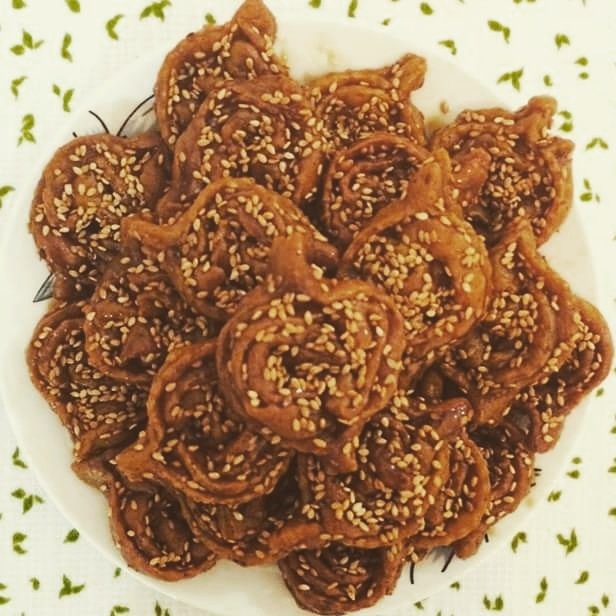
Ramadan is the ninth month of the Islamic calendar and the month of fasting, as Britannica explains. In Morocco, the cookie is so closely tied to it that families often fry several kilos in the days before the month begins, then serve them every evening.
At iftar, the meal that breaks the fast, it usually sits beside dates, boiled eggs and a steaming bowl of harira. The sweet, honeyed cookie and the spiced tomato and lentil soup may seem like an odd pair, but the contrast is exactly what people love.
Beyond Ramadan
Chebakia also appears at Eid, weddings, family celebrations and religious holidays. Later in the evening it is served with mint tea brewed from green tea such as Sultan Grain Ambar or with coffee.
Making a batch is a social event too: relatives and neighbors gather to fold dough for hours.
Storing and Making Chebakia Ahead
One of the best things about these cookies is how well they keep. The honey coating seals each piece, so a big batch made a week or two before Ramadan can last most of the month.
At room temperature
Let the cookies cool and set completely, then layer them in an airtight tin or container with parchment between layers. Keep them in a cool, dry place away from sunlight. They generally stay good for several weeks.
In the freezer
Many cooks freeze them in sealed bags or boxes for a few months. Thaw them at room temperature in the closed container so condensation does not make them sticky.
Reusing the honey
The honey left in the pot after soaking is full of sesame and spice. Strain it and use it for the next round of frying, or drizzle it over msemen, baghrir or yogurt.
Chebakia Shapes and Variations
Once you know the basic dough, you can play with shape and flavor. These are some of the versions you will see on North African tables.
Flower chebakia
The five-strip flower described above, the version most people picture when they hear the word.
Braided griwech
Strips of dough braided or twisted into long knots, fried crisp and dipped in honey.
Bouchnikha
Thin threads of dough piped or coiled into nests, a specialty around Agadir.
With almonds
Some recipes replace part of the sesame with blanched ground almonds for a softer, richer cookie.
Baked chebakia
Baked instead of fried and dipped briefly in warm honey, a good option for smaller batches.
Spice twists to try
Add a pinch of ground ginger or nutmeg for warmth, or a few crushed cinnamon sticks simmered in the honey. A spoonful of rose water, such as Mazyana rose water, gives the glaze a different floral note.
Whatever you change, keep the toasted sesame. It is the flavor that defines the cookie. If you are building a full Ramadan table, our Moroccan biscuits are a quick way to add variety alongside your homemade cookies.

Chebakia Nutrition Notes
General information only, not medical advice. This is a festive treat, not an everyday snack. It is fried and soaked in honey, so each piece carries a fair amount of sugar and fat. Exact numbers depend on size, how long it soaks and how much oil it absorbs, so we do not list a calorie count.
Sesame brings some fiber and minerals, but this is still a sweet. Enjoy a piece or two with tea.
Allergy and diet notes
- Sesame is a major food allergen in the USA, so always tell guests the cookies are full of it.
- The dough contains wheat flour, egg and butter.
- People who manage blood sugar should be careful with honey-soaked sweets and ask a health care provider for guidance.
- Honey should never be given to babies under 12 months old.
Best Chebakia Ingredients to Buy in the USA
The sesame, spices and honey that give these cookies their real Moroccan flavor, shipped to all 50 states. Flour, butter and eggs come from any supermarket.



Planning your Ramadan baking? Order a week or two early and check our shipping policy for delivery times to your state.
Chebakia FAQs
What is chebakia made of?
Chebakia is made from a dough of flour, toasted ground sesame, anise, cinnamon, saffron, butter, oil, egg, vinegar and orange blossom water. It is fried, soaked in hot honey and topped with sesame seeds.
Why is chebakia eaten during Ramadan?
It is a long-standing Moroccan tradition. The cookies keep for weeks, so families make a big batch before the month and serve them every evening at iftar with harira, dates and tea. The honey and sesame also give quick energy after a day of fasting.
What is the difference between chebakia and griwech?
They are close relatives. The Moroccan cookie is usually folded into a flower with plenty of sesame in the dough, while griwech is the Algerian version, often braided or twisted. Both are fried and soaked in honey.
How long does chebakia last?
Stored in an airtight container in a cool, dry place, it generally keeps for several weeks. Many cooks also freeze it for a few months and thaw it in the closed container.
Can I make chebakia without folding it into a flower?
Yes. You can twist each slit rectangle once, braid strips of dough, or cut simple shapes. The taste stays the same; only the look changes.
Can chebakia be baked instead of fried?
Yes. Bake the shaped pieces at around 350 degrees Fahrenheit until golden, then dip them in warm honey and sprinkle with sesame. Baked versions are lighter but less crunchy than fried ones.
Why did my chebakia turn out soft?
Soft cookies are usually underfried or rolled too thick. Roll the dough to about 2 mm, fry slowly at about 325 to 340 degrees Fahrenheit until amber brown inside, and let the cookies cool fully on a rack before storing.
Further reading: Chebakia (Wikipedia) · Chebakia (Wikipédia, French) · Ramadan (Britannica)
Start Your Ramadan Baking Early
Sesame, anise, saffron, honey and orange blossom for your cookies, delivered anywhere in the USA.
Shop Baking Essentials Shop All Products