The Moroccan Tea Ceremony Rituals, Etiquette and Meaning
Who pours, why the glasses come in threes, what the tray and teapot mean, how to behave as a guest and how to host your own atay ritual at home in the USA.
The Moroccan tea ceremony is the ritual of preparing and serving sweet green tea with fresh mint to guests as a sign of welcome and respect. A host, traditionally the head of the household, brews the tea on a tray in front of everyone, rinses the leaves, adds sugar and mint, then pours from a height into small glasses. Guests are usually offered at least three rounds, and accepting a glass is part of good manners.
Your Complete Atay Ritual Guide
In Morocco, tea is not just a drink. The Moroccan tea ceremony is how families welcome guests, how shopkeepers greet customers, and how friends slow down at the end of a long day. It can last half an hour or more, and the conversation matters as much as the tea.
This guide walks you through the history of the ritual, the tray and tools, the role of the person who pours, the meaning of the three glasses and the etiquette every guest should know. Everything you need to recreate it is in our tea time collection, shipped across the USA.
The Moroccan Tea Ceremony at a Glance
What the Moroccan Tea Ceremony Really Means
At its heart, the Moroccan tea ceremony says one thing: you are welcome here. Offering tea is often the first gesture a family makes when someone walks through the door, whether that person is a relative, a neighbor or a stranger.
The Moroccan tea ceremony is also about time. The host does not hurry. Rinsing the leaves, waiting for the pot to heat, tasting and adjusting the sugar all take a few minutes, and those minutes give everyone a chance to sit, settle in and talk.
Hospitality as a value
Generosity toward guests is deeply valued in Moroccan culture. Serving tea well, with a good foam and the right sweetness, reflects on the host and the household. A carefully prepared pot shows care for the guest.
A ritual for every class and place
The Moroccan tea ceremony looks much the same in a city apartment, a mountain village or a desert camp. The tools may be silver or simple steel, but the order of the steps and the spirit behind them stay the same.
A Short History of the Moroccan Tea Ceremony
Tea is not native to North Africa, so the Moroccan tea ceremony is younger than many people think. Tea arrived through European trade, and for a long time it was a luxury for the royal court and wealthy city families.
The first master of tea
Historians record that during the reign of Sultan Slimane, from 1792 to 1822, an official named Ahmed Bin Mubarek served as the first “mul atay,” or master of tea, at the royal court. The title shows that preparing tea was already treated as a special skill.
From luxury to everyday ritual
British merchants shipped green tea and sugar into the port of Essaouira in the 19th century. After an Anglo-Moroccan treaty in 1856, imports rose sharply. Tea gradually spread from cities to the countryside, and by the early 20th century it was part of daily life across the country.
Teapots with a British accent
The tea sets came from Europe too. Research from the City University of New York describes how a Moroccan merchant in Manchester worked with silversmith Richard Wright to supply trays and teapots, and suggests the Moroccan word “rayt,” used for fine white metal, may come from his name. Read the CUNY article for the full story.

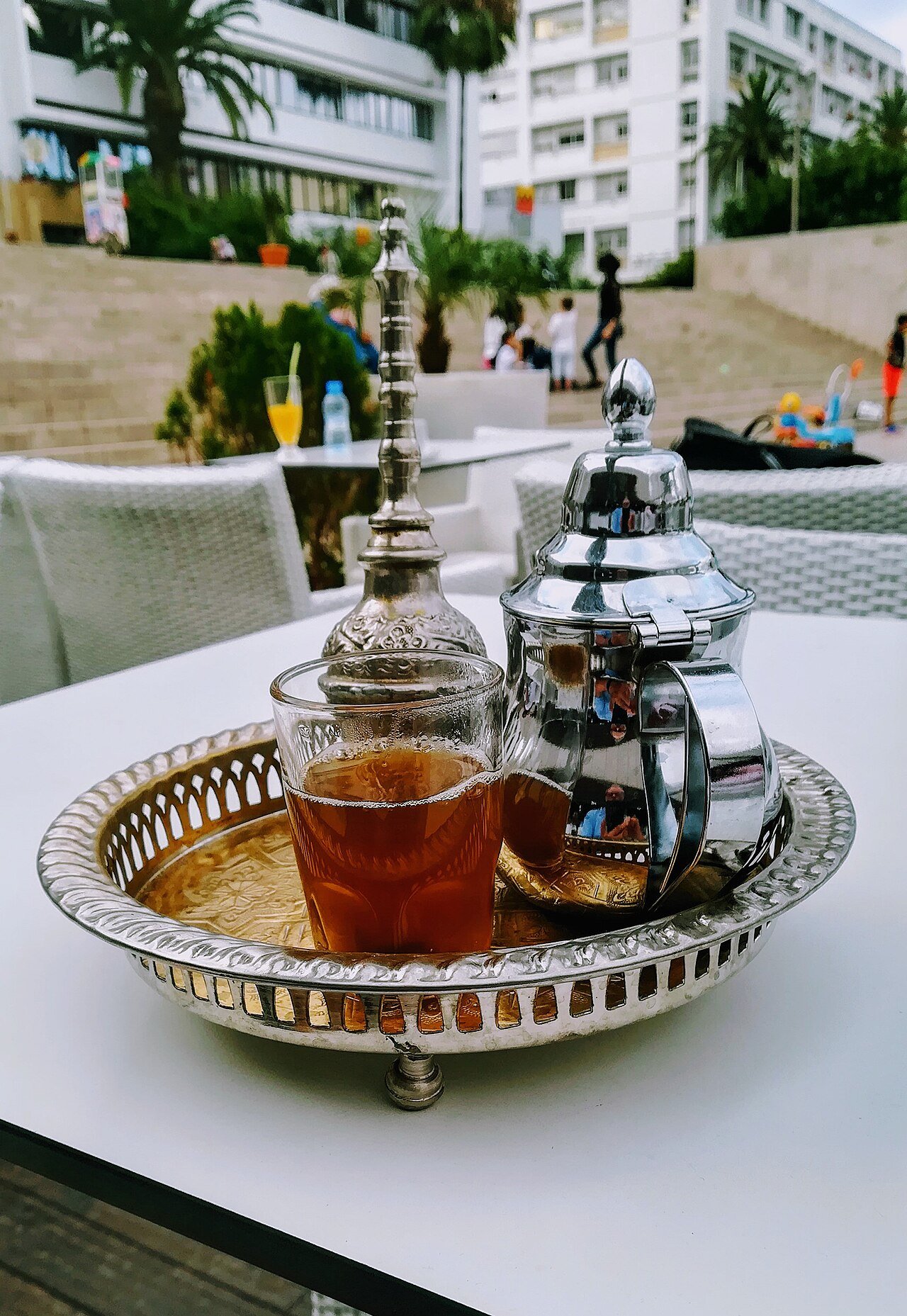
The Tray, Teapot and Glasses
Every Moroccan tea ceremony is built around a small set of objects. Many families keep a “good” set for guests and holidays, and a plain one for everyday use.
The tray (siniya)
A round metal tray, often engraved, holds the teapot and glasses. It catches drips from the high pour and makes it easy to carry the whole service to the guests.
The teapot (berrad)
The teapot has a rounded body, a domed lid and a long curved spout that gives the host control when pouring from a height. It is made of metal so it can be warmed briefly over a flame or a charcoal brazier.
The glasses
Tea is served in small, thick-based glasses, often decorated with gold or colored patterns. They hold only a few ounces, so the tea stays hot and the host can serve several rounds.
The boxes
Many sets include lidded boxes or canisters for green tea, sugar and sometimes mint. A small hammer was once used to break pieces from a sugar cone; today most families use cubes or ingots.
What each piece does in the Moroccan tea ceremony
| Item | Role in the ceremony | Modern substitute |
|---|---|---|
| Metal teapot | Brewing, short heating and the high pour | Any stovetop-safe pot with a spout |
| Round tray | Holds the service and catches drips | A large serving tray or platter |
| Small glasses | Serving rounds and showing off the foam | Heatproof espresso or juice glasses |
| Tea and sugar boxes | Keep ingredients ready on the tray | Airtight tins or jars |
| Kettle or brazier | Keeps water at a full boil | An electric kettle |
The Host and the Tea Master
Traditionally, the head of the family prepares tea for guests, often the father or the eldest man in the house. In many homes today, mothers, grandmothers and grown children pour just as often, and the honor goes to whoever makes the best pot.
In a Moroccan tea ceremony, the person who pours sits in front of the tray, usually on a low cushion or at a low table, with the guests around them. Making tea in front of the guests is part of the respect: they see the care that goes into each glass.
The tea master at big events
At weddings, religious celebrations and large family gatherings, one person is often put in charge of the tea for the whole event. This person, sometimes still called the mul atay, may prepare dozens of pots and must keep the flavor and foam consistent from the first round to the last.
Learning by watching
Few people learn the Moroccan tea ceremony from a book. Children watch parents and grandparents, then are trusted to pour for the family, and finally for guests. The USC Digital Folklore Archives records exactly this kind of family tradition passed down through generations.
10 Steps of the Moroccan Tea Ceremony
Families each have their own small habits, but most hosts run the Moroccan tea ceremony in this order. The quantities below suit a standard teapot that serves 6 to 8 small glasses.
Seat the guests
Guests sit around a low table. The host brings the tray, teapot, glasses, tea, sugar and a bunch of fresh mint.
Bring water to a full boil
A kettle of about 4 cups of water is brought to a rolling boil and kept hot nearby.
Add the green tea
About one heaping tablespoon of Chinese green tea goes into the empty pot. Gunpowder or chunmee styles are the usual choice.
Save the first infusion
A splash of boiling water is swirled over the leaves and poured into a glass. Many families call this concentrated first pour the “spirit” of the tea.
Wash the leaves
Another splash of water rinses the leaves and is thrown away. This removes dust and some bitterness.
Add sugar and mint
The saved “spirit” goes back in, followed by sugar and a generous handful of spearmint pressed below the surface.
Fill and warm the pot
The pot is filled with boiling water and set over low heat for a few minutes, just until it starts to bubble.
Pour back and forth
The host pours a glass and tips it back into the pot several times. This mixes the sugar without stirring and bruising the mint.
Taste and adjust
A small sip in a glass tells the host if the pot needs more sugar or a little more time. Only then is it ready for guests.
Pour high and serve
The host lifts the pot as the stream begins to raise a light foam, fills each glass about two-thirds and serves the most honored guest first.
Why the high pour matters
In the Moroccan tea ceremony, the long stream of tea cools it slightly, adds air, mixes the sugar and creates a thin layer of foam on top of each glass. In many homes, a good foam is the sign of a skilled host and a well-made pot.
Most hosts start with the spout close to the glass, lift it to about a foot above as the tea flows, then lower it again before stopping. It takes practice, so beginners should try it over a sink first.
Good tea makes the ritual easier. Classic pellet teas such as Sultan Grain Ambar No.16 and Sultan Fine Grain No.18, or the curled-leaf Al Mohajer 41022, are all made for this style of brewing.

The Three Glasses of Life, Love and Death
The best-known saying of the Moroccan tea ceremony compares three rounds of tea to the stages of life. The leaves stay in the pot, so each round really does taste different.
Life
The first round opens the ritual. Some families describe it as gentle, like the start of life; others say it is bitter, like life itself.
Love
The second round has steeped longer and tastes stronger and fuller. It is compared to love, which grows deeper over time.
Death
The third round is the most steeped. Depending on who tells the saying, it is bitter like death or soft and calm, like a peaceful end.
Should you drink all three?
Three glasses is the classic number, especially in the Sahara, where tea rounds can stretch over an evening. In everyday Moroccan homes, one or two glasses is perfectly polite, and the host will refresh the pot with new mint and sugar if guests stay longer.
The Wikipedia entry on Maghrebi mint tea records one version of the proverb along with more history of the drink.
Moroccan Tea Ceremony Etiquette for Guests
You do not need to know every custom of the Moroccan tea ceremony to be a good guest. A few simple habits show respect and make your host happy.
Do
- Accept at least one glass. Refusing tea outright can feel like refusing the welcome.
- Hold the glass near the rim or base, because the middle gets very hot.
- Compliment the tea, the foam or the mint. Hosts appreciate it.
- Say “shukran” (thank you) and, after drinking, “bssaha,” a common way to wish someone good health.
- Try the cookies, nuts or dates served with the tea.
Avoid
- Pouring the tea yourself, unless the host asks you to.
- Rushing off right after the first glass if you have time to stay.
- Adding sugar to your own glass; sweetness is set in the pot.
If you need less sugar for health reasons, it is fine to mention it politely before the tea is made. Most hosts will happily adjust.
Occasions and Regional Customs
The Moroccan tea ceremony appears at almost every moment of life, and the ritual changes a little from region to region and season to season.
After meals
A pot after lunch or dinner is common in many homes, especially after rich dishes like couscous or tagine.
Welcoming visitors
Tea is the standard first offer to any visitor, often with Moroccan biscuits, almonds or dates.
Weddings
Weddings may involve many pots at once and a dedicated tea maker who keeps the glasses coming all night.
After iftar
During Ramadan, tea often follows the evening meal, served with sweets and pastries.
Wormwood tea
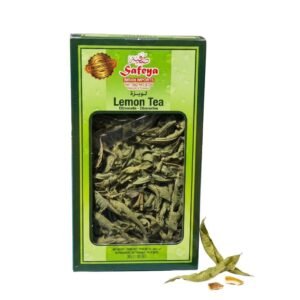
In cold months, some families add or substitute shiba (wormwood) for a bitter, warming note. Safeya wormwood is a convenient dried option.
Desert tea rounds
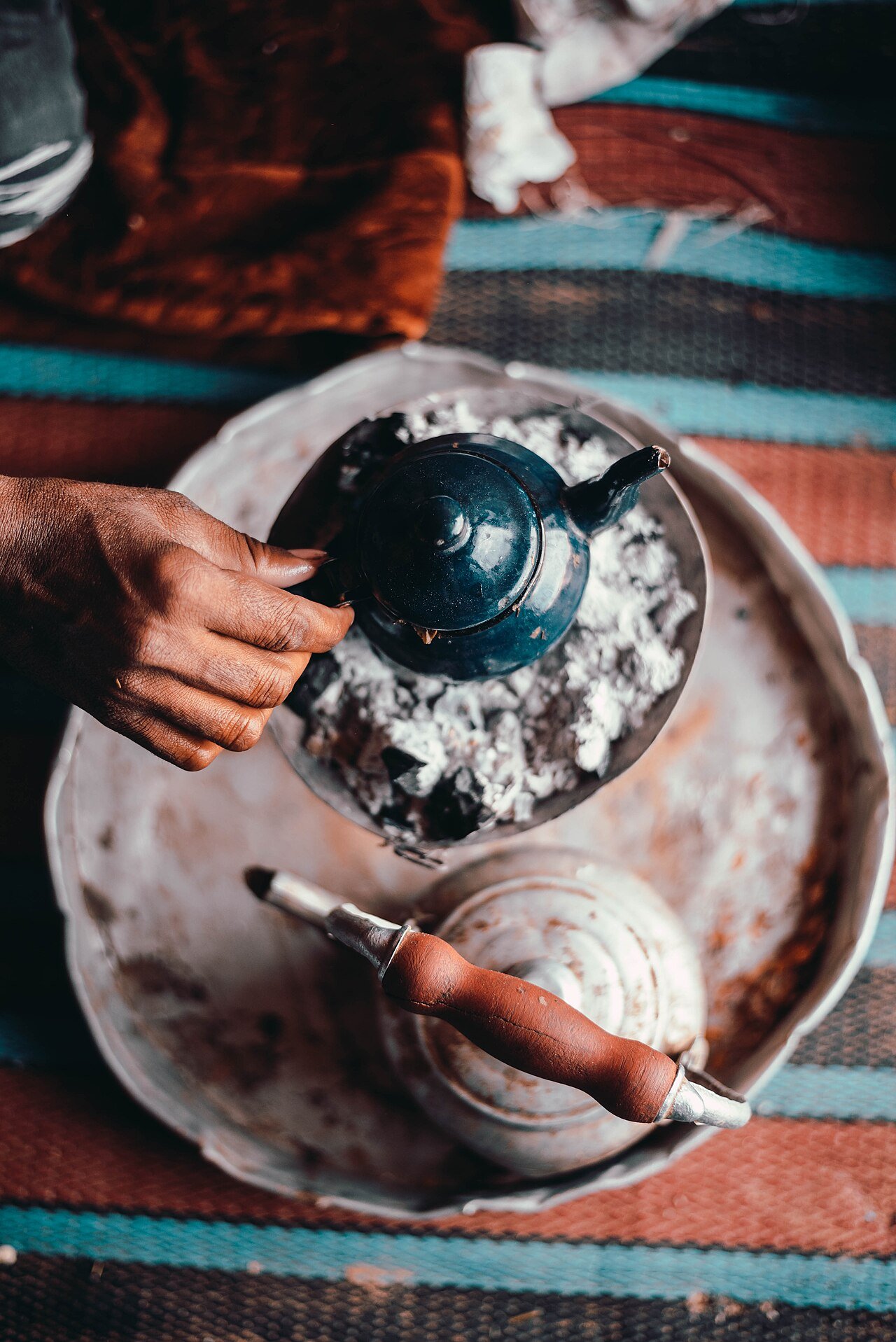
In the south and the Sahara, tea is brewed strong over embers and served in slow rounds, often in three glasses.
The Moroccan tea ceremony across the Maghreb
Neighbors share the custom with their own twists. Tuareg communities in the Sahara are known for strong, foamy tea and long rounds around a fire. In Tunisia, mint tea is often topped with pine nuts, and Algerian families serve minted green tea alongside a strong coffee culture.
Explore flavors from the region in our Tunisian products and Algerian products collections.
Herbal touches
Many Moroccan families add a sprig of lemon verbena, marjoram or sage to the pot. Browse our Moroccan herbs to try these variations.

How to Host a Moroccan Tea Ceremony at Home
You do not need a silver set or a riad courtyard to host a Moroccan tea ceremony in the USA. A spouted pot, a few small glasses and good ingredients are enough to share the ritual with friends.
A simple checklist
- Tea: one 200 g or 500 g bag of Chinese green tea, such as Sultan Chaara 4011.
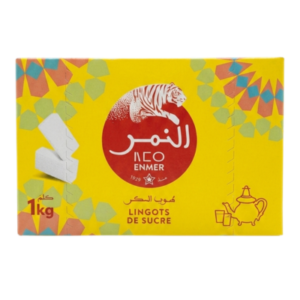
- Sugar: Enmer sugar cubes or Sultan sugar ingots for the traditional look.
- Mint: two big bunches of fresh spearmint, or Tayeb dried mint as a backup.
- Something sweet: cookies, almonds, dates or soft Spofy madeleines.
- Setting: a tray, low seating if you have it, and an hour with no rush.
Moroccan tea ceremony tips for a first-time host
Make one practice pot before guests arrive so you know how sweet you like it. Keep the kettle hot for refills, and plan on a fresh handful of mint for each new pot.
Above all, enjoy it. The Moroccan tea ceremony is meant to feel generous and relaxed, not formal. If the foam is not perfect, nobody minds; the welcome is what counts.
| Guests | Green tea | Sugar (approx.) | Fresh mint |
|---|---|---|---|
| 2 to 4 | 1 tablespoon | 4 to 5 cubes | 1 bunch |
| 5 to 8 | 1 heaping tablespoon | 6 to 8 cubes | 1 large bunch |
| 9 to 12 | 2 pots, 1 tablespoon each | 6 cubes per pot | 2 bunches |
Sweetness is personal, so treat these amounts as a starting point and adjust to your guests.
Moroccan Tea Ceremony Essentials to Buy in the USA
Authentic North African teas, sugar and herbs for your own Moroccan tea ceremony, shipped to all 50 states.
 Best gunpowderSultan Al Jawhar Extra
A classic Moroccan-style gunpowder green tea for everyday pots.
Shop now


Need delivery details? See our shipping policy.
Moroccan Tea Ceremony FAQs
What is the Moroccan tea ceremony?
It is the traditional way of preparing and serving sweet mint green tea to guests. The host brews the tea in front of everyone, pours it from a height into small glasses and usually offers several rounds as a sign of hospitality.
Who pours the tea in a Moroccan tea ceremony?
Traditionally the head of the household or an honored family member pours. Today anyone skilled at making tea may take the role, and at weddings a dedicated tea maker often serves the whole event.
Why are three glasses of tea served?
The leaves stay in the pot, so each round tastes different. A well-known saying compares the three glasses to life, love and death, though the exact wording varies from family to family.
Is it rude to refuse tea in Morocco?
Refusing outright can feel like turning down the welcome, so it is polite to accept at least one glass. If you cannot have sugar or caffeine, explain kindly and most hosts will understand.
Why is Moroccan tea poured from so high?
Pouring from a height cools the tea a little, mixes the sugar, adds air and creates a light foam on top of the glass. A good foam is seen as the mark of a skilled host.
How long does a Moroccan tea ceremony take?
Making one pot takes about 15 minutes, but the full ritual with several rounds and conversation often lasts half an hour or longer. Nobody rushes it.
What do I need to host a Moroccan tea ceremony at home?
You need Chinese green tea, fresh spearmint, sugar, boiling water, a spouted metal teapot and small heatproof glasses. A tray and some cookies or dates complete the setting.
Further reading: Maghrebi mint tea (Wikipedia) · USC Digital Folklore Archives · Why Moroccan teapots look British (CUNY)
Pour Your First Round This Weekend
Green teas, sugar ingots and herbs for an authentic Moroccan tea ceremony, delivered anywhere in the USA.
Shop Tea Time Shop All Products