Madeleines with Tea A North African Teatime Favorite
Where these shell cakes come from, why they became a staple of the afternoon tea table from Casablanca to Tunis, a foolproof recipe with the famous hump, flavor twists and the best teas to pour alongside.
Madeleines are small, buttery French sponge cakes baked in shell-shaped molds, with ridges on one side and a rounded hump on the other. They come from the Lorraine region of France and are made from eggs, sugar, flour and butter. In Morocco, Algeria and Tunisia they are a favorite with afternoon tea, breakfast and school snacks, and they taste best fresh, dipped in a glass of hot mint tea or coffee.
Your Complete Madeleines Guide
Walk into almost any bakery or corner shop in North Africa around four in the afternoon and you will find madeleines. Golden, shell-shaped and light, they sit on the tea tray next to ghriba and sesame cookies, and they are often the first sweet a child learns to dunk into a glass of tea.
This guide explains what makes the little cakes special, how a French cake from Lorraine found a second home on the Maghreb tea table, and how to bake a batch with a proud hump at home. If you would rather skip the oven, our cookies and biscuits collection has ready-to-eat options shipped across the USA.
Madeleines at a Glance
What Are Madeleines?
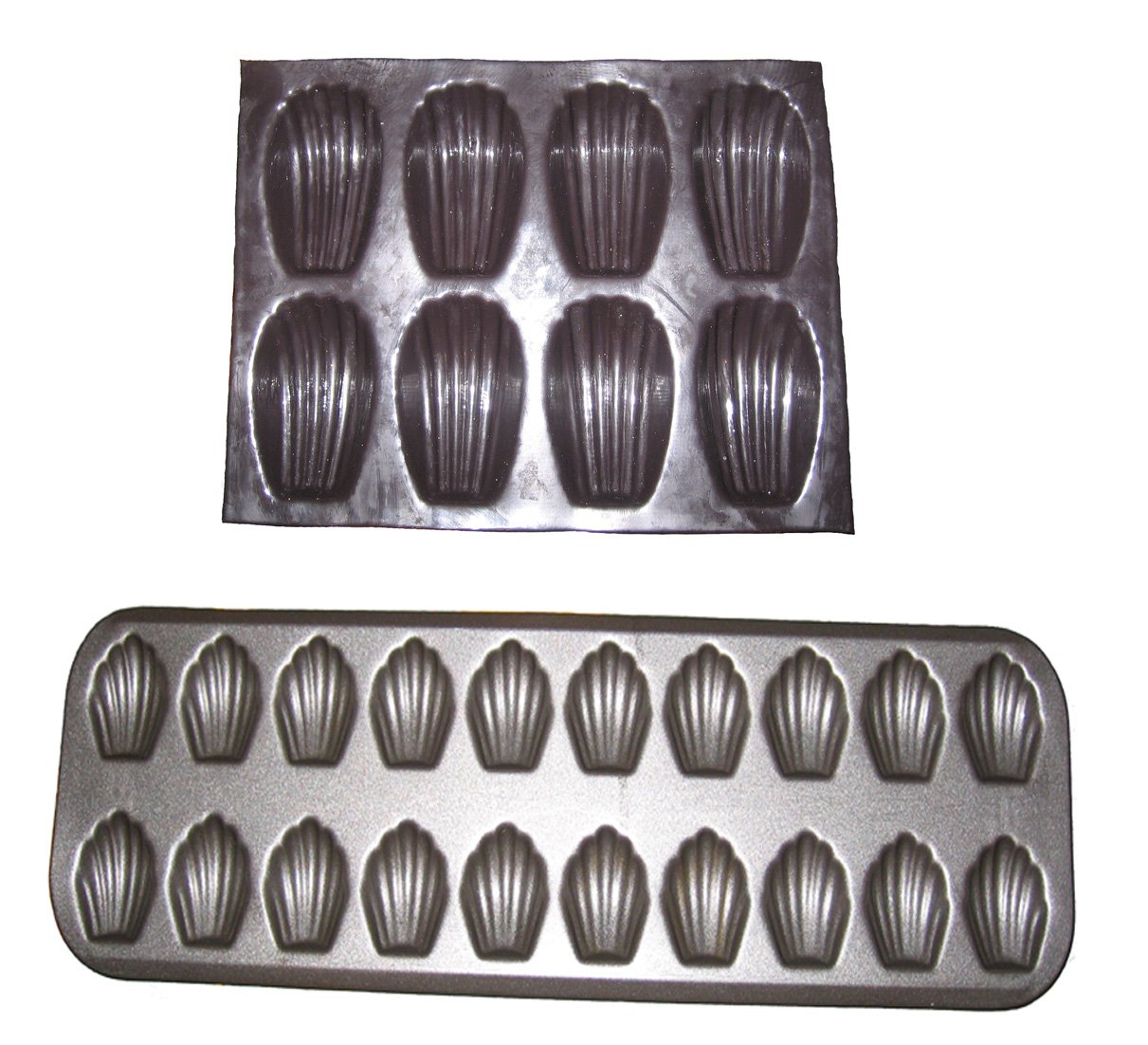
They are bite-size cakes made from a simple sponge batter that is richer than most, thanks to a generous amount of melted butter. The batter is baked in a special pan with shallow scallop-shaped wells, which gives each cake its ridged shell pattern.
A good madeleine has two personalities. The outside is thin, golden and slightly crisp at the edges, while the inside is soft, moist and springy. The flat ridged side faces down in the pan, and the top rises into a small dome that bakers call the hump.
Classic French versions are flavored with lemon zest or vanilla. Many modern recipes add honey, ground almonds, brown butter, orange blossom water or a dip of chocolate. They are not a cookie and not quite a cupcake; think of them as a tea cake that fits in two bites.

The History of Madeleines and the Proust Story
The cakes are linked to the small towns of Commercy and Liverdun in Lorraine, in northeastern France. The name is usually traced to a cook called Madeleine, but nobody agrees on who she was.
The most popular legend points to Madeleine Paulmier, a cook for Stanislas Leszczyński, the exiled King of Poland who became Duke of Lorraine. The story says she baked the little cakes for the duke, and that his family later carried them to the French court at Versailles.
From railway snack to symbol
Written recipes for cakes “à la Madeleine” appear in French cookbooks from the 1750s. In the 19th century, vendors sold the cakes on the platforms of Commercy station on the Paris to Strasbourg line, and travelers spread their fame across France.
Proust and the famous memory
The cake became world famous through Marcel Proust. In Swann’s Way, published in 1913, the narrator dips a madeleine into a spoonful of tea and the taste suddenly brings back his childhood. Today a “Proustian moment” means a smell or taste that unlocks a memory. Britannica’s entry on Swann’s Way gives a good overview of the novel.

Why North Africa Loves Madeleines with Tea
French rule shaped daily life in the Maghreb for decades: Algeria from 1830 to 1962, Tunisia from 1881 to 1956 and Morocco, as a protectorate, from 1912 to 1956. One lasting result is a strong French pastry culture that lives side by side with local sweets.
That is why bakeries in Casablanca, Algiers and Tunis sell croissants and French tea cakes next to msemen, makroud and ghriba. Over the years, these sponge shells simply became part of the local tea table.
The afternoon goûter
Many North African families keep a late afternoon snack break, often called the goûter, borrowed from French. Children come home from school to a glass of tea or milky coffee and something sweet. Packaged madeleines are popular for this moment because they are soft, mild and easy to share.
They also appear at breakfast, on trays for visiting guests and on Ramadan evenings after iftar, when a glass of tea and a light cake feel right.
With sweet mint tea
In Moroccan homes the cakes are often served beside a pot of atay. The light cake balances the sweet, strong tea, and dunking is encouraged.
With coffee or tea
Algerian families serve them with café au lait in the morning or mint tea in the afternoon, alongside homemade gâteaux for guests.
With tea and nuts
In Tunisia, a plate of shell cakes goes well with mint tea topped with pine nuts or almonds, a classic café pairing.
The Hump, the Crumb and the Shell
Bakers judge these cakes by three things: a crisp golden shell, a soft and even crumb, and a clear hump on the back. All three come from temperature.
Why madeleines get a hump
The hump forms when cold, thick batter meets a very hot oven. The edges set quickly against the hot metal, while the center is still liquid. Steam and the baking powder push that soft center up and out, like a small volcano.
That is why most recipes ask you to chill the batter for at least an hour, and many bakers chill the buttered pan too. A hot start, around 400°F, gives the best lift.
The crisp edges
Butter is the secret to the shell. A well-buttered, lightly floured pan fries the outside of the batter slightly, which creates golden ridges and makes the cakes release cleanly.

How madeleines compare with other tea cakes
| Cake | Main fat | Texture | Typical flavor |
|---|---|---|---|
| Madeleine | Melted butter | Light sponge, crisp edges | Lemon, vanilla, honey |
| Financier | Brown butter | Dense, moist, chewy | Almond, egg whites only |
| Magdalena | Oil or butter | Fluffy, muffin-like | Lemon, often in paper cups |
| Ghriba | Butter or oil | Crumbly, cracked top | Almond, coconut, semolina |
| Sablé | Butter | Short, crisp cookie | Butter, vanilla, cinnamon |
Classic Madeleines Recipe with a North African Touch
This recipe makes about 16 standard madeleines. It uses honey for moisture and a splash of orange blossom water, a favorite flavor in Maghreb baking. Plan for at least 1 hour of chilling.
Ingredients
- 2 large eggs, at room temperature
- 1/2 cup (100 g) granulated sugar
- 1 tablespoon honey
- Pinch of fine salt
- Finely grated zest of 1 lemon
- 1 teaspoon orange blossom water or 1 teaspoon vanilla
- 3/4 cup plus 2 tablespoons (about 105 g) all-purpose flour
- 1 teaspoon baking powder
- 1/2 cup (1 stick, 113 g) unsalted butter, melted and cooled, plus extra for the pan
- Powdered sugar for dusting (optional)
You will need
- A 12-cup madeleine pan (metal gives the crispest edges)
- A whisk or hand mixer
- A pastry brush and a cooling rack
Method
- Whip the eggs. Whisk the eggs, sugar, honey and salt for 2 to 3 minutes, until pale, thick and about doubled in volume.
- Add flavor. Whisk in the lemon zest and orange blossom water or vanilla.
- Fold in the dry mix. Sift the flour and baking powder over the eggs and fold gently with a spatula until no dry streaks remain.
- Fold in the butter. Pour in the cooled melted butter in two additions and fold until the batter is smooth and glossy.
- Chill. Cover the bowl and refrigerate for at least 1 hour, or up to 24 hours. Cold batter is the key to the hump.
- Prepare the pan. Brush each well with soft butter, dust with flour and tap out the excess. Chill the pan for 10 minutes. Heat the oven to 400°F (205°C).
- Fill. Drop a heaped tablespoon of cold batter into the center of each well, about three-quarters full. Do not spread it; it will flow in the oven.
- Bake. Bake for 9 to 11 minutes, until the edges are golden, the humps have risen and the tops spring back when touched.
- Release and cool. Tap the pan firmly on the counter to release the cakes, then cool them shell-side up on a rack. Dust with powdered sugar and serve with tea.

Ingredients from the North African pantry
The orange blossom water in this recipe is the same one used in Moroccan cookies and pastries. A bottle of Samra orange blossom water lasts for many batches, because a teaspoon is enough.
If you like a stronger floral note, swap 1 tablespoon of the sugar for Alsa orange blossom sugar. For a classic vanilla version, use Alsa vanilla sugar or Idéal vanilla sugar, both sold in handy sachets.
For the honey, a mild, floral one works best. Tayeb eucalyptus honey adds moisture and a soft caramel flavor without overpowering the butter. Explore more in our Moroccan baking essentials.
8 Tips for Perfect Madeleines
Flat, dry or stuck madeleines are frustrating, but they almost always have simple causes. These tips solve the most common problems.
Rest the batter
An hour in the fridge thickens the batter and builds the hump. Overnight resting deepens the flavor too.
Start hot
Fully preheat the oven to 400°F. Some bakers drop it to 350°F after 4 minutes so the cakes cook through without over-browning.
Butter every ridge
Use soft butter and a brush, then dust with flour. Spray alone can leave the ridges pale and sticky.
Do not overfill
Three-quarters full is plenty. Too much batter spills over and hides the shell pattern.
Fold, do not beat
Once the flour goes in, fold gently. Beating develops gluten and makes the cakes tough.
Watch the edges
Pull them out when the edges are golden brown and the centers spring back. One extra minute dries them out.
Unmold right away
Tap the pan as soon as it leaves the oven. Cakes left to sit in the pan steam and lose their crisp edge.
Eat them fresh
They are at their best within a few hours. Bake just before guests arrive, or keep extra batter in the fridge.
North African Twists on Classic Madeleines
Once you have the basic batter, it is easy to give the cakes a Maghreb accent with ingredients from a North African pantry.
Orange blossom and honey
Use 1 teaspoon orange blossom water and 2 tablespoons honey in place of the vanilla, then brush the warm cakes with a little honey syrup.
Almond shells
Replace 1/4 cup of the flour with finely ground almonds for a richer, moister crumb that tastes like a Moroccan almond cookie.
Lemon and anise
Add the zest of 1 lemon and 1/2 teaspoon ground anise seed, a flavor common in Moroccan breads and fekkas.
Sesame-dipped
Brush the tops of cooled cakes with honey and dip them in toasted sesame seeds, a nod to chebakia.
Chocolate-dipped shells
Dip the ridged side in melted dark chocolate and let it set. Kids love them with a glass of milky tea.
Jam-filled
Pipe a little apricot, fig or strawberry jam into the hump while the cakes are warm. El Baraka fig spread works well.
Best Teas to Pair with Madeleines
These cakes are mild and buttery, so they pair with almost any tea. Still, some combinations are especially good. In North Africa, the classic partner is sweet green tea with fresh mint, poured into small glasses.
| Tea | Why it works | Best madeleine flavor | Try |
|---|---|---|---|
| Moroccan mint tea | Fresh, sweet and strong; cuts through butter | Lemon or plain | Sultan Grain Ambar No.16 |
| Chunmee green tea | Bright and robust, great for dunking | Honey or almond | Al Mohajer 41022 |
| Jasmine green tea | Floral notes echo orange blossom | Orange blossom | Sultan Jasmine N°25 |
| Lemon verbena (louiza) | Caffeine-free and lemony | Lemon or vanilla | Safeya Louiza |
| Café au lait | The classic breakfast pairing in Algeria and Tunisia | Chocolate-dipped | Coffee from our tea time shelf |
How to serve madeleines with tea
Arrange the cakes shell-side up on a small plate or tray so the ridges show. Offer two or three per guest, with dates, almonds or other cookies for variety. Sweeten mint tea with Enmer sugar cubes and pour it high so each glass has a light foam.
Dunking is not rude here; it is half the fun. A madeleine soaks up tea quickly, so dip only the tip and eat it straight away.
Store-Bought vs Homemade Madeleines
Homemade madeleines are hard to beat when they are warm, but they go stale within a day. Packaged versions are made to stay soft for weeks, which is why so many North African families keep a box in the cupboard for unexpected guests.
When to choose packaged
Store-bought cakes are ideal for lunchboxes, road trips, school snacks and quick tea breaks. Individually wrapped cakes such as Spofy classic madeleines stay fresh after the box is opened. For a treat, try the cocoa-filled Spofy madeleines.
How to store homemade madeleines
- Cool them completely, then store in an airtight tin for up to 2 to 3 days.
- Freeze baked cakes in a sealed bag for up to 1 month; warm them at 300°F for 3 to 4 minutes.
- Keep unbaked batter covered in the fridge for up to 24 hours and bake small batches as needed.
- Refresh slightly stale cakes with a few minutes in a warm oven, or simply dunk them in tea.

Other tea-time biscuits to keep on hand
If your guests like variety, mix the soft cakes with crisp biscuits. Be Petit Beurre butter biscuits, Henry’s cinnamon sablés and Henry’s vanilla biscuits are all popular with tea, and soft Bimo Merendina cakes are a favorite with children.
Best Madeleines and Tea Essentials to Buy in the USA
Ready-made cakes plus the teas and baking extras for a homemade batch, shipped to all 50 states.
 Best ready-madeSpofy Classic Madeleines
Soft, individually wrapped madeleines for tea or lunchboxes.
Shop now

 Best for bakingSamra Orange Blossom Water
The floral note that gives madeleines a Maghreb accent.
Shop now

Browse all baking essentials for more ideas, and see our shipping policy for delivery times.
Madeleines FAQs
What are madeleines made of?
They are made from eggs, sugar, flour and melted butter, usually with a little baking powder and lemon zest or vanilla. Many recipes also add honey or ground almonds for extra moisture.
Are madeleines a cookie or a cake?
They are a small sponge cake with a soft, springy crumb like a cake, but they are eaten by hand like a cookie, which is why they are often sold in the cookie aisle.
Why are my madeleines flat with no hump?
The batter was probably not cold enough or the oven was not hot enough. Chill the batter for at least 1 hour, chill the buttered pan, and bake in a fully preheated 400°F oven.
Do I need a madeleine pan?
For the shell shape, yes. A metal madeleine pan gives the best ridges and crisp edges. Without one, you can bake the batter in a mini muffin pan; the taste is the same, only the shape changes.
Why are madeleines so popular in North Africa?
French pastry traditions took root in Morocco, Algeria and Tunisia during the colonial era and stayed. Madeleines are soft, mild and easy to share, so they fit naturally with mint tea, breakfast coffee and the afternoon snack break.
How long do madeleines stay fresh?
Homemade ones are best on the day they are baked and keep for 2 to 3 days in an airtight tin. Packaged, individually wrapped cakes stay soft much longer; check the date on the box.
What tea goes best with madeleines?
In North Africa the favorite is sweet mint tea made with Chinese green tea. Jasmine green tea, lemon verbena and a milky coffee are also excellent pairings.
Further reading: Madeleine (cake), Wikipedia · Swann’s Way, Britannica · Commercy, Wikipedia
Set Your Tea Table This Afternoon
Ready-made tea cakes, North African teas, sugar and baking extras, delivered to your door anywhere in the USA.
Shop Cookies and Biscuits Shop All Products