Gunpowder Green Tea The Complete Guide to Pearl Tea
What gunpowder green tea is, where it comes from, how the grades work, how it tastes and how to brew it two ways: as a simple cup or as the base of North African mint tea.
Gunpowder green tea is a Chinese green tea whose leaves are rolled into small, tight pellets that unfurl when they meet hot water. It tastes bold, grassy and slightly smoky, keeps well and is the classic base for Moroccan mint tea. For a plain cup, steep 1 teaspoon in 5 to 6 oz of water at 158 to 176°F for about one minute; for atay, rinse the pellets with boiling water and brew them with mint and sugar.
Your Complete Gunpowder Tea Guide
Open a box of gunpowder green tea and you will see something that looks more like dark green buckshot than tea leaves. Each little pellet is a whole leaf, rolled tight. Drop a spoonful into hot water and the pellets slowly open up into long, glossy leaves, which is half the fun of brewing it.
In the United States it is often sold as a specialty tea, but in North Africa it is an everyday pantry staple. Families in Morocco, Algeria, Tunisia and the Sahara buy it by the box for mint tea. You can find the same brands they use in our tea time collection, alongside sugar, herbs and everything else for a full tea tray.
This guide explains how gunpowder green tea is made, how to read grades and box labels, what makes a good batch and how to brew it without bitterness.
- 01Gunpowder tea at a glance
- 02What it is and why it is called gunpowder
- 03From Zhejiang to North Africa
- 04How the pellets are made
- 05Grades and how to choose
- 06Flavor compared with other teas
- 07How to brew it two ways
- 08The heart of mint tea
- 09Tips, storage and mistakes
- 10Caffeine and health
- 11More ways to enjoy it
- 12What to buy
- 13FAQs
Gunpowder Green Tea at a Glance
What Is Gunpowder Green Tea and Why the Name?
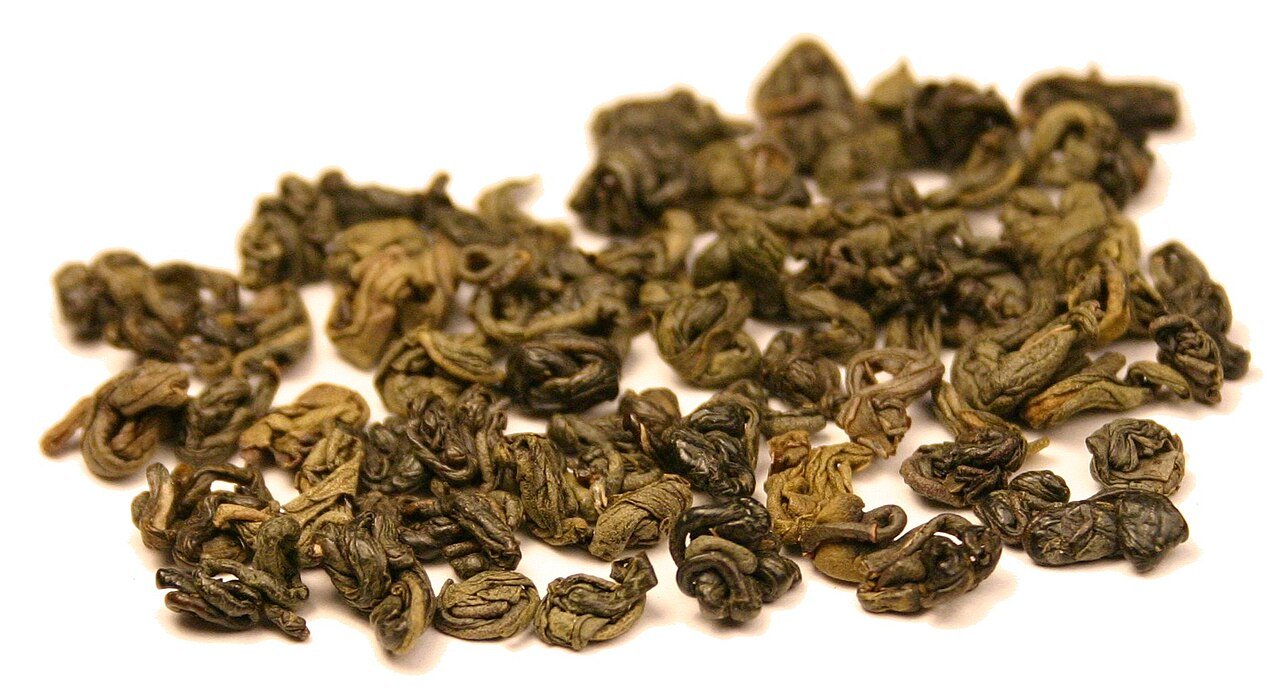
Gunpowder green tea is a rolled green tea. After picking, the leaves are heated to stop oxidation, then rolled into small balls and dried. Because nothing is fermented or oxidized, it stays in the green tea family, like sencha or dragon well, even though it looks very different in the tin.
In Chinese it is called zhu cha, which means “pearl tea” or “bead tea.” The English name is newer, and nobody is completely sure where it came from. The most common explanation is simply the look of the pellets, which resemble old black-powder grains. Other stories point to the way the leaves “burst” open in water or to the faint smoky note in many batches.
Whatever the origin, the shape is the real point. Rolling protects the leaf, so gunpowder green tea travels and stores better than flat, delicate green teas. That durability is a big reason it became the tea of choice for long trade routes, desert caravans and busy kitchens.

From Zhejiang to North Africa
Rolled green tea production is often traced back to China’s Tang dynasty (618 to 907). The best-known style comes from the Pingshui area of Zhejiang province in eastern China, which is why you may see “Pingshui gunpowder” on specialty labels.
From China, gunpowder green tea traveled with European merchants. Historians link its arrival in Morocco to British traders in the 18th and 19th centuries, with much of it landing at the Atlantic port of Essaouira. Over time it moved from palaces and city homes to every corner of the country.
Still a North African favorite
Today the Maghreb is one of the world’s most important markets for Chinese green tea. Chinese customs figures reported in Moroccan media showed Morocco as the top buyer of Chinese tea in 2025. Much of that is gunpowder and chunmee, packed under familiar brand names for local shoppers.
Gunpowder is also grown outside China. Taiwan produces a “Formosa gunpowder,” which is often a rolled oolong rather than a true green tea, and Sri Lankan estates make hand-rolled versions.
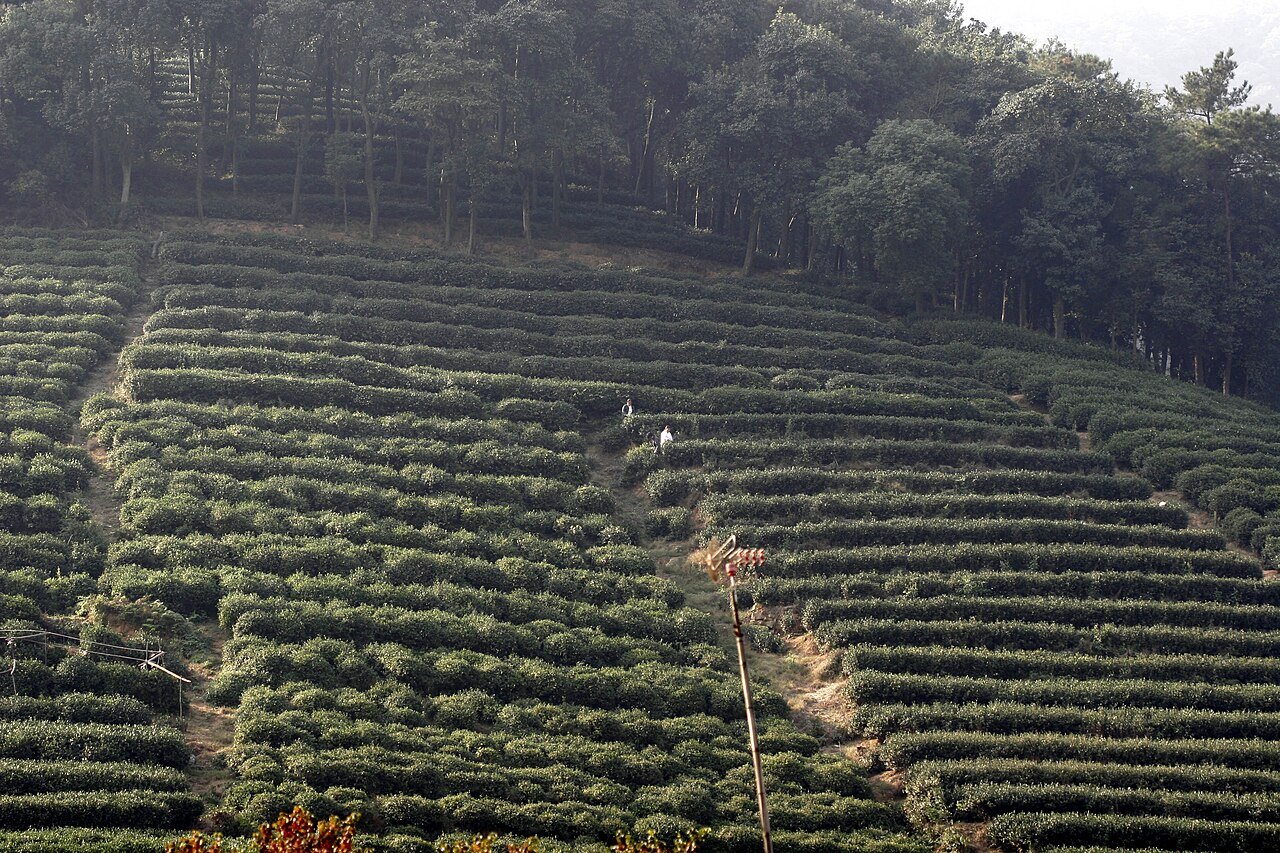
How Gunpowder Green Tea Is Made
The steps are similar to other Chinese green teas. The difference is the long rolling stage that gives the pellets their shape.
Picking
Leaves from the Camellia sinensis bush are picked. Higher grades use younger, smaller leaves; everyday grades use larger ones.
Softening
The fresh leaves rest briefly so they lose some moisture and become soft enough to roll without tearing.
Fixing the green
The leaves are heated, often by steaming or pan firing. This stops oxidation and keeps the tea green. Pan firing can add the gentle toasty note.
Rolling into pearls
Leaves are rolled again and again until they form tight balls. Only top grades are still rolled by hand; most is machine rolled.
Final drying
The pellets are dried to lock in the shape and keep the tea shelf-stable for travel and storage.
Sorting
Finished tea is sorted by pellet size and tightness, then sold under grade numbers or trade names.
Gunpowder Green Tea Grades and How to Choose
Gunpowder green tea is often sold with a grade code, such as 3505, alongside a trade name. In general, smaller and tighter pellets mean a higher grade, while larger, looser pellets suggest older leaves and a stronger, rougher brew.
Common names on the label
Pinhead describes very small pellets, usually a premium choice. Temple of Heaven is a well-known trade name for good-quality Chinese gunpowder. Codes like 3505 (with 3505AAA among the top) and 9375 (a lower grade) are used in the wholesale trade.
Reading North African boxes
Moroccan and Algerian brands often print “Thé Vert en Grains” (green tea in grains) on gunpowder boxes. Curled-leaf chunmee is sold as “en filaments” or under the number 41022. If you want true gunpowder green tea, look for the word grains.
| What you see | What it tells you | Good for |
|---|---|---|
| Small, tight, even pellets | Younger leaves, higher grade | Plain cups and lighter mint tea |
| Medium pellets with a little sheen | Fresh, everyday quality | Daily Moroccan atay |
| Large, loose or flaky pellets | Older leaves, lower grade | Strong, very sweet tea only |
| Dull, dusty, lots of powder | Old or poorly stored tea | Better to replace |
How Does Gunpowder Tea Taste Compared with Other Teas?
Gunpowder green tea is stronger than most green teas. Expect a full body, a fresh grassy edge, a touch of smoke or toast and some astringency, especially if it steeps too long. Higher grades taste smoother and sweeter; everyday grades are punchier.
That boldness is exactly why North Africans prefer it. A delicate green tea would disappear under a big bunch of mint and several cubes of sugar. Gunpowder green tea holds its own.
| Tea | Leaf shape | Taste | Shop |
|---|---|---|---|
| Gunpowder (grains) | Tight pellets | Bold, grassy, lightly smoky | Sultan Grain Ambar No.16 |
| Chunmee (41022) | Curled, eyebrow-shaped leaves | Bright, slightly plum-like, also strong | Al Mohajer 41022 |
| Jasmine green | Leaves scented with jasmine | Floral and soft | Sultan Jasmine N°25 |
| Japanese sencha | Flat needles | Delicate, sweet, vegetal | Not used for atay |
How to Brew Gunpowder Green Tea Two Ways
There are two quite different ways to make gunpowder green tea. The cup method uses cooler water for a gentle flavor. The North African method uses boiling water, mint and sugar for a strong, sweet pot.
Method 1: A simple cup
- 1 level teaspoon of gunpowder green tea
- 5 to 6 oz water heated to 158 to 176°F
- A cup, small teapot or infuser with room to expand
- Warm the cup. Rinse your cup or pot with hot water and pour it out.
- Heat the water. Bring water just off the boil, or let boiled water sit for 2 to 3 minutes.
- Steep briefly. Pour over the pellets and steep about 1 minute.
- Re-steep. Strain, then use the same leaves for 2 or 3 more cups, adding 15 to 30 seconds each time.
Method 2: Moroccan pot
- 1 heaping tablespoon gunpowder green tea
- 1 large bunch fresh spearmint
- 4 to 6 sugar cubes, to taste
- About 4 cups boiling water
- Wake the tea. Swirl the pellets with half a cup of boiling water for 20 seconds and keep this first glass.
- Rinse. Add a little more boiling water, swirl and discard it.
- Build the pot. Return the first glass, add sugar and mint, then fill with boiling water.
- Heat and pour. Warm gently 3 to 5 minutes, mix by pouring a glass out and back, then pour high into glasses.

Gunpowder Green Tea in North African Mint Tea
Across the Maghreb, gunpowder green tea is the backbone of atay, the sweet mint tea poured for guests, after meals and at every celebration. The tea gives body and a gentle bitterness, the mint adds freshness and the sugar rounds everything out.
Unlike the cup method, the North African pot uses boiling water and a short simmer. The quick rinse at the start removes dust and some of the harsh tannins, so the result is strong but not unpleasant. You can read more about the drink in the Maghrebi mint tea entry on Wikipedia.
If fresh mint is hard to find, a box that already blends pellets and mint, like Sultan Grain Ambar with Mint or the peppermint version, is a handy shortcut.
Regional styles of gunpowder tea
Sweet, minty atay
Plenty of spearmint and sugar, poured high for foam. In winter, some families add a pinch of wormwood (shiba) from the Moroccan herbs shelf.
Desert-strength tea
In the Algerian Sahara, Tuareg-style tea is brewed very strong in a small pot and served in rounds, each glass a little sweeter and milder than the last.
Tea with pine nuts
Tunisians often float toasted pine nuts or almonds in a glass of minty green tea, which adds a rich, nutty bite.
8 Tips for Better Gunpowder Green Tea
Most complaints about gunpowder green tea, mainly bitterness, come down to too much leaf, too much heat or tea that has been stored badly.
Use less leaf
Pellets are compact. A level teaspoon per cup or one heaping tablespoon per Moroccan pot is plenty.
Match water to method
Cooler water for plain cups, boiling water plus a rinse for mint tea. Mixing the two methods leads to bitter tea.
Keep cup steeps short
About one minute is enough at first. Long steeps pull out tannins and a dry, puckering taste.
Give leaves room
Tiny tea balls trap the pellets. Use a pot or a large basket infuser so the leaves can open fully.
Use filtered water
Very hard or chlorinated tap water flattens the flavor. Filtered water gives a cleaner cup.
Seal it tight
Keep tea in an airtight tin away from light, heat, moisture and strong smells like coffee or spices.
Finish within months
Rolled tea keeps longer than flat leaves, but flavor still fades. Buy a box size you will use up.
Re-steep the leaves
Good gunpowder green tea gives several infusions. Each one tastes a little different, which many drinkers enjoy.
Caffeine and Health Notes
General information only, not medical advice. Gunpowder green tea contains caffeine, like all tea from the Camellia sinensis plant. The Mayo Clinic lists about 29 mg of caffeine in an 8 oz cup of brewed green tea, compared with about 48 mg for black tea and 96 mg for brewed coffee. Actual amounts vary with the leaf, the amount used and the steeping time.
A strong Moroccan pot can be more concentrated than a light cup, but the glasses are small. If you are sensitive to caffeine, use less tea, more mint and shorter heating, or drink it earlier in the day.
Green tea is widely studied, but according to the National Center for Complementary and Integrative Health, the evidence for most health claims is not conclusive. The same source notes that green tea may interact with some medications. People who are pregnant, nursing or taking medicine should ask a health care provider.
| Question | Short answer |
|---|---|
| Does it have caffeine? | Yes, usually less than black tea or coffee per cup. |
| Is it healthier than other green teas? | No strong evidence either way; it is simply green tea in a rolled shape. |
| Is sweet mint tea a light drink? | Traditional atay is very sweet. Cut the sugar if you drink it often. |
| Caffeine-free option? | Brew mint or lemon verbena on its own, without tea. |
More Ways to Enjoy Gunpowder Green Tea
Gunpowder green tea is not only for mint tea. Its sturdy flavor works well in cold drinks, blends and even cooking.
In West Africa, for example, people in Senegal and The Gambia brew Chinese gunpowder on small charcoal stoves into a strong, sweet tea called attaya, served in several rounds. It shows how far this little pellet has traveled.

Iced mint tea
Brew a Moroccan pot, cool it, then pour over ice with fresh mint and a slice of lemon.
Overnight steep
Add 1 tablespoon of pellets to 4 cups cold water, refrigerate 8 to 10 hours and strain for a smooth, low-bitterness drink.
Half and half
Mix gunpowder with jasmine green tea for a pot that is both bold and fragrant.
Tea-smoked flavor
Finely ground pellets make a light rub for chicken or fish, or a base for poaching rice.
Best Gunpowder Green Tea to Buy in the USA
The North African brands families actually use for atay, shipped to all 50 states. All of these are “en grains,” the true gunpowder style.
 Best all-rounderSultan Grain Ambar No.16
A classic Moroccan gunpowder with a bold, golden cup.
Shop now
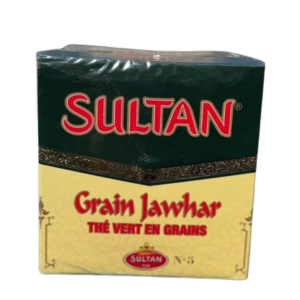 Slightly smokySultan Grain Jawhar No.35
Rolled grains with a toasty note that loves fresh mint.
Shop now

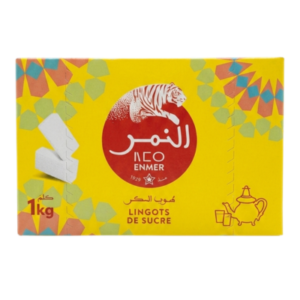
Prefer cubes? Try Enmer sugar cubes or Sultan sugar bars, and see our shipping policy for delivery times.
Gunpowder Green Tea FAQs
What is gunpowder green tea?
It is a Chinese green tea whose leaves are rolled into small pellets after heating. The pellets open up in hot water. It has a bold, grassy and lightly smoky taste and is the classic base for North African mint tea.
Why is it called gunpowder tea?
The most common explanation is that the rolled pellets look like old black-powder grains. In Chinese it is called zhu cha, meaning pearl or bead tea.
Is gunpowder green tea the same as chunmee?
No. Both are Chinese green teas and both are used for mint tea, but gunpowder is rolled into pellets, while chunmee has curled, eyebrow-shaped leaves and is often sold under the number 41022.
How much caffeine is in gunpowder green tea?
It contains caffeine like all true tea. Mayo Clinic lists about 29 mg for an 8 oz cup of brewed green tea, but the amount varies with how much tea you use and how long it steeps.
What water temperature should I use?
For a plain cup, use water around 158 to 176 degrees Fahrenheit and steep about one minute. For Moroccan mint tea, use boiling water, rinse the leaves first and add mint and sugar.
Why does my gunpowder green tea taste bitter?
Usually too much leaf, water that is too hot for the cup method, or a long steep. Use a level teaspoon per cup, cooler water and a short infusion, or rinse the leaves when making mint tea.
How long does gunpowder green tea last?
Because the leaves are tightly rolled, it keeps better than flat green teas. Stored airtight away from light, heat and moisture, it stays enjoyable for many months, though flavor slowly fades. Shiny pellets are a good sign of freshness.
Further reading: Gunpowder tea (Wikipedia) · NCCIH: Green Tea · Mayo Clinic: Caffeine content
Stock Up on Real Gunpowder Tea
Authentic North African gunpowder green tea, sugar and herbs, delivered to your door anywhere in the USA.
Shop Tea Time Shop All Products